Top Borosilicate Glass Water Bottle Manufacturers Guide
Selecting high-performance hydration vessels requires a deep understanding of material science, specifically the distinction between standard soda-lime glass and advanced borosilicate options. For commercial procurement officers and brand owners, the priority is often a balance between thermal resilience, chemical purity, and structural integrity. High borosilicate glass, characterized by its low coefficient of thermal expansion, provides a superior solution for both hot and cold beverage applications, eliminating the risk of thermal shock that typically plagues lower-grade glassware.
This guide examines the technical advantages of double-wall insulation and the critical role of borosilicate glass in maintaining liquid purity. By focusing on the physical properties of "hard glass," we provide a framework for evaluating the quality and safety standards necessary for professional-grade water bottles, ensuring that the final product is not only aesthetically pleasing but also functionally durable for diverse consumer environments.

Technical Properties of High Borosilicate Glass for Premium Hydration
High Borosilicate Glass, frequently referred to as "hard glass," is engineered for environments where temperature fluctuations are common. Unlike standard glass, it possesses a significantly low expansion rate, which allows it to withstand a strain temperature difference of up to 120 degrees. This characteristic is vital for products designed to hold boiling tea or iced coffee, as it prevents the material from cracking under sudden thermal stress.
Beyond thermal resistance, this material is prized for its high chemical stability and transmittance. In the context of daily drinking liquid, the acid-resistant nature of borosilicate ensures that harmful substances are not precipitated into the beverage. Because it is naturally lead-free and BPA-free, it provides a non-toxic alternative to plastic or low-grade glass, making it the preferred choice for health-conscious consumers and medical-grade applications.
- Thermal Stability: Resists cracking during rapid temperature shifts.
- Chemical Inertness: Does not react with acidic or alkaline liquids.
- Optical Clarity: High transmittance for a premium visual experience.
- Structural Hardness: Increased scratch resistance compared to soda-lime glass.

Thermal Management Through Double-Wall Vacuum Insulation Design
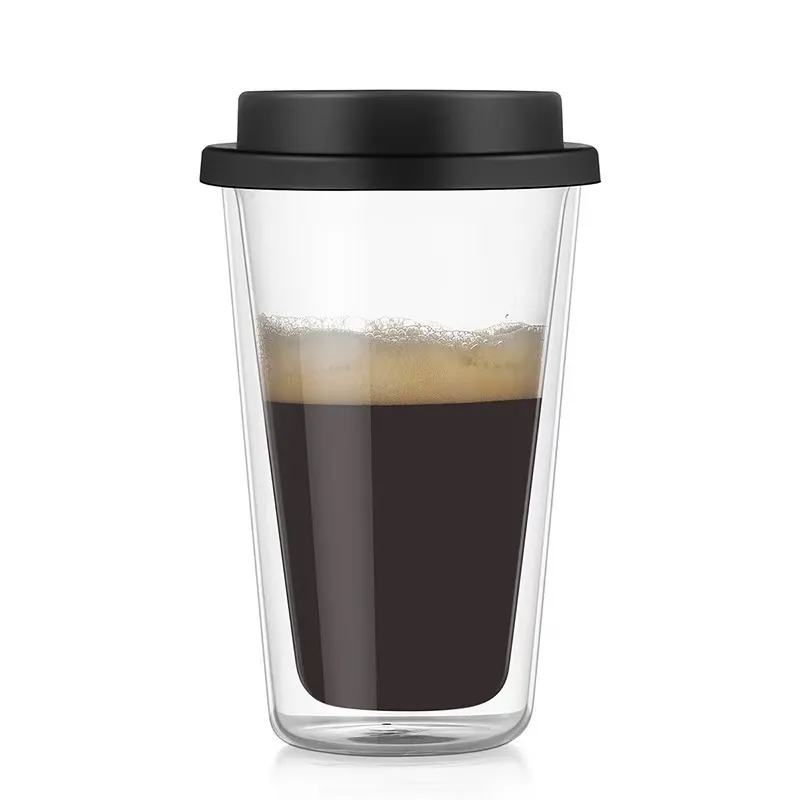
The implementation of a double-layer wall design serves as a critical thermal barrier between the liquid and the external environment. By creating an insulating air gap, the bottle prevents the outer surface from reaching extreme temperatures. This ensures that users can hold hot beverages comfortably without burning their hands, while simultaneously preventing condensation from forming on the exterior when containing icy drinks.
This insulation logic extends to the longevity of the beverage temperature. While not a full vacuum flask, the double-wall construction significantly slows the rate of heat exchange. Furthermore, the integration of a handle design improves ergonomic handling, making the vessel more practical for office, home, or travel use. The combination of borosilicate material and double-wall geometry results in a product that is safe for use in the fridge, freezer, and dishwasher.
Application Scenarios and Buyer Evaluation Criteria
When evaluating suppliers among various glass water bottle manufacturers, buyers must look beyond the surface aesthetics. The primary focus should be on the consistency of the glass wall thickness and the seal integrity of the double-wall vacuum. A failure in the seal can lead to fogging between the layers, which renders the product defective. Procurement managers should prioritize factories that can provide documented test reports on thermal shock and chemical leaching.
Typical application scenarios for these premium bottles include:
- Corporate Gifting: High-end aesthetic and health-focused materials.
- Wellness Brands: BPA-free and lead-free certifications for detox and health drinks.
- Hospitality Sector: Durable, dishwasher-safe glassware for luxury hotel rooms.
- Retail Distribution: Versatile products suitable for both hot and cold beverages.
Borosilicate vs. Soda-Lime Glass Comparison
| Feature | High Borosilicate | Soda-Lime Glass | Impact on User |
|---|---|---|---|
| Thermal Expansion | Very Low | High | Prevents thermal shock breakage |
| Chemical Stability | High | Moderate | Ensures no toxic precipitation |
| Temperature Delta | 120°C | Approx. 40-60°C | Safe for boiling water pour |
| Toxicity Profile | Lead-Free / BPA-Free | Varies by Grade | Health-safe drinking experience |
| Durability | High Hardness | Moderate | Better resistance to wear |
Customization Capabilities and Quality Assurance Frameworks
For B2B clients, the ability to customize a product to align with brand identity is paramount. This includes not only the external branding but also the functional specifications of the vessel. Professional manufacturing services typically offer customized logo application, color variations for lids and handles, and tailored packaging solutions to protect the glass during international transit.
Quality assurance must be integrated into every stage of production. From the raw material inspection of the borosilicate grains to the final pressure tests of the double-wall insulation, a rigorous protocol is required. Utilizing specialized warehouse management and approved factory tests ensures that every batch meets the required strength and transmittance standards before shipping, reducing the rate of return for distributors.
Future Trends in Sustainable Glassware Procurement
The global shift toward sustainability is driving a massive transition from single-use plastics to reusable glass. The next generation of glass water bottles is focusing on "hybrid designs"—combining the purity of borosilicate glass with sustainable silicone sleeves or bamboo lids to enhance impact resistance. Buyers are increasingly seeking suppliers who can demonstrate a transparent supply chain and a commitment to non-toxic manufacturing processes.
As consumer demand for transparency grows, the role of certification becomes more critical. Future procurement strategies will likely prioritize products that can be verified as 100% lead-free and BPA-free through third-party laboratory testing. By investing in high-hardness, thermally resistant glassware, brands can position themselves at the intersection of luxury, health, and environmental responsibility.
Frequently Asked Questions Regarding Borosilicate Glassware
What makes borosilicate glass different from regular glass?
Borosilicate glass contains boron trioxide, which significantly lowers the coefficient of thermal expansion. This makes it far more resistant to thermal shock, meaning it won't crack when exposed to sudden temperature changes, unlike standard soda-lime glass.
Is double-wall glass safe for the dishwasher?
Yes, high-quality double-wall borosilicate glass is designed to be dishwasher safe. However, it is recommended to use a gentle cycle to avoid mechanical impact with other dishes.
Can these bottles be used in the freezer?
Yes, due to the low expansion rate of borosilicate glass, these bottles are safe for the fridge and freezer, provided they are not filled to the absolute brim to allow for slight liquid expansion.
Are there any toxic substances in borosilicate glass?
High borosilicate glass is naturally lead-free and BPA-free. Its chemical stability prevents the precipitation of harmful substances into the drinking liquid, even when exposed to high temperatures or acidic contents.
How do I identify a high-quality double-wall bottle?
Check for clarity and the absence of bubbles in the glass. A high-quality bottle should have a consistent gap between the walls and a secure seal that prevents moisture from entering the insulation layer.
What customization options are available for bulk orders?
Common customizations include logo printing, custom lid colors, handle modifications, and tailored packaging. Most professional manufacturers can accommodate OEM requirements based on approved factory tests.
Technical References and Industry Standards
- ISO Standards for Glassware Quality and Safety
- FDA Guidelines on Food Contact Materials
- ASTM International Standards for Borosilicate Glass
- WHO Recommendations on Non-Toxic Drinking Containers
For enterprises seeking a reliable partner in the manufacture of premium hydration vessels, prioritizing material purity and thermal engineering is key. We provide comprehensive customization services and rigorous quality testing to ensure your products meet global safety standards.
Related Industry Guides