 TEL: +86 18903393212
 Email: tina@yintoglassware.com

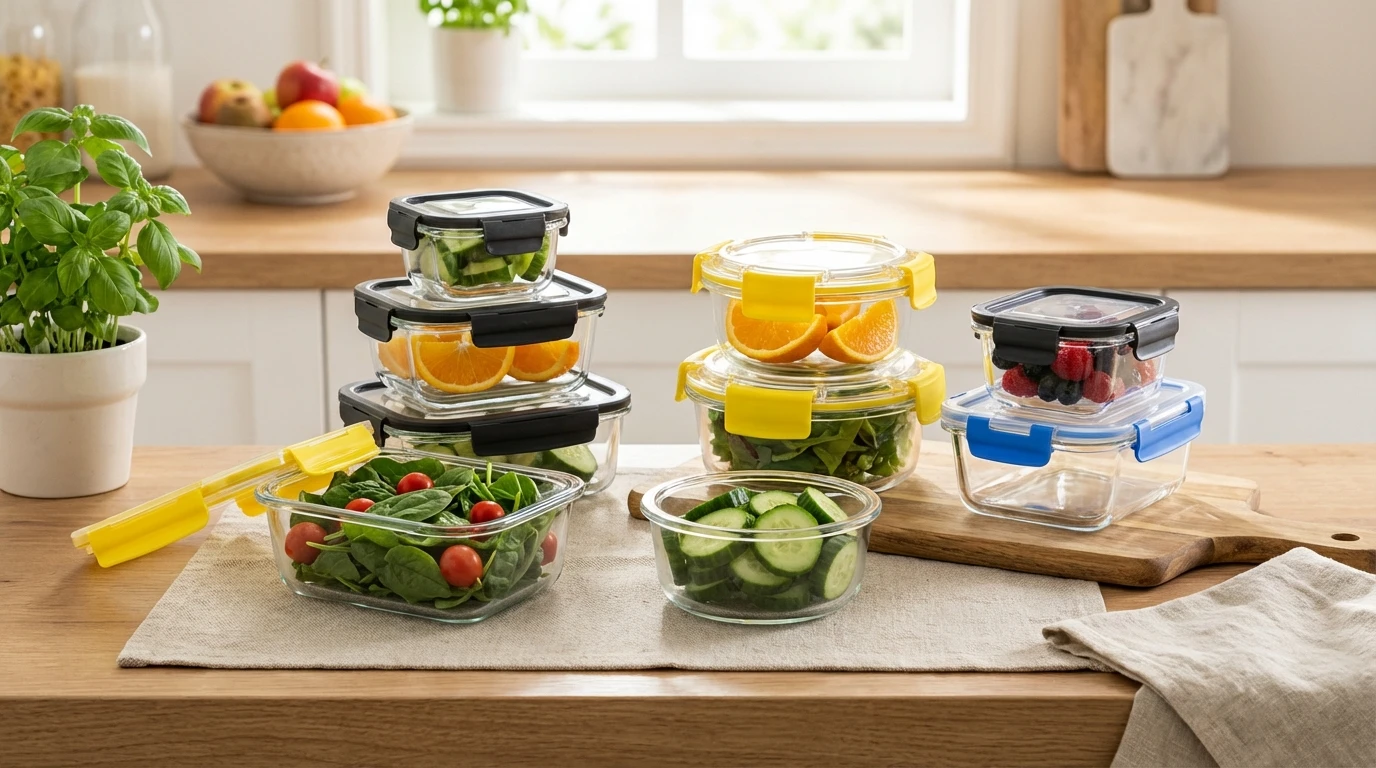
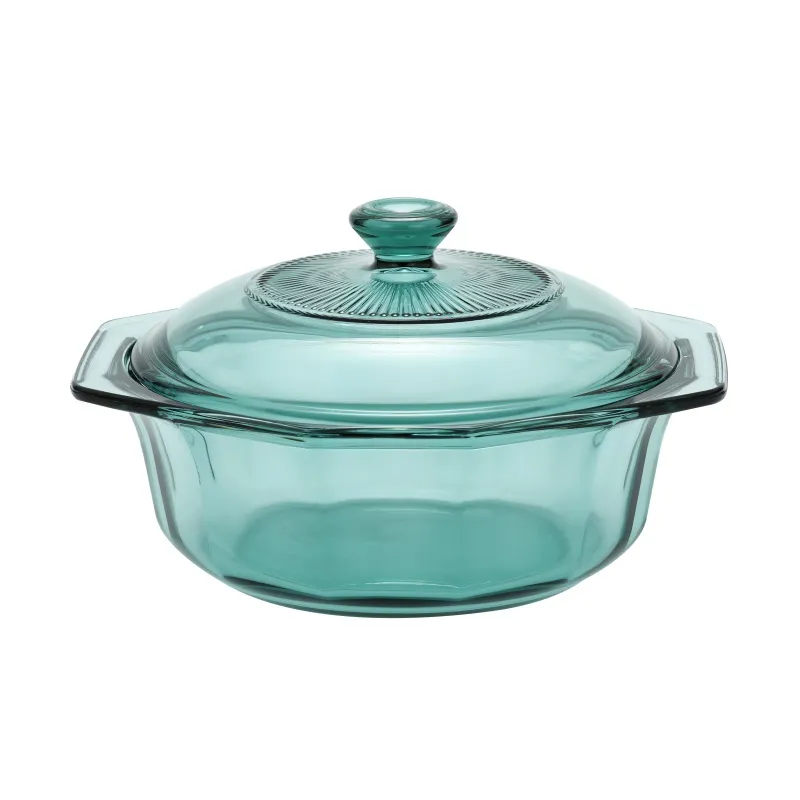
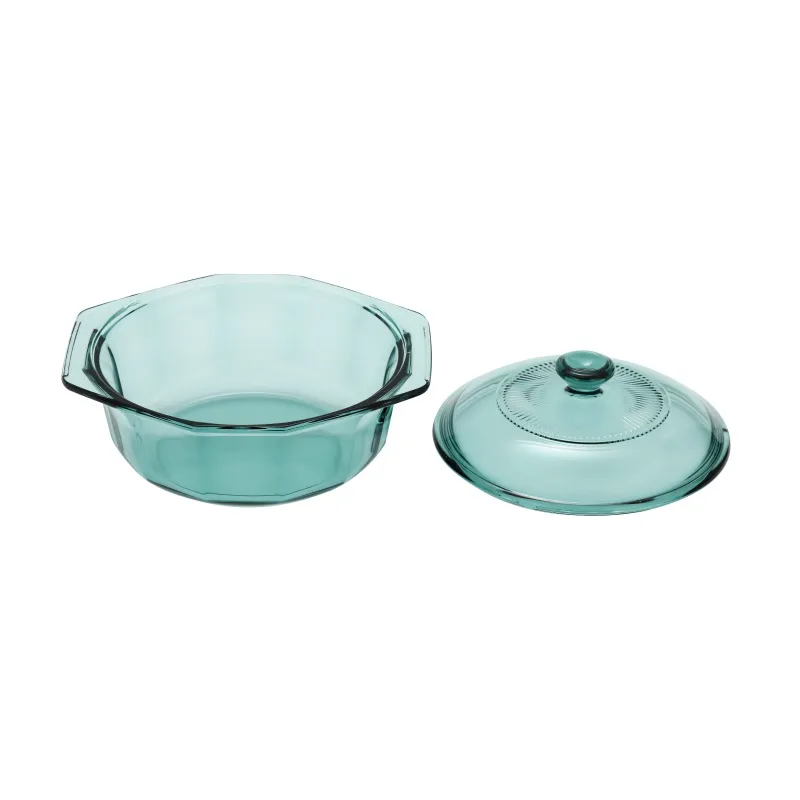
1.0L/4Cup/34OZ Round Color Glass Casserole Dish w/Glass Lid?
Hands-on Review: A Colorful, Lab-Grade Casserole Dish That’s Built for Real Kitchens
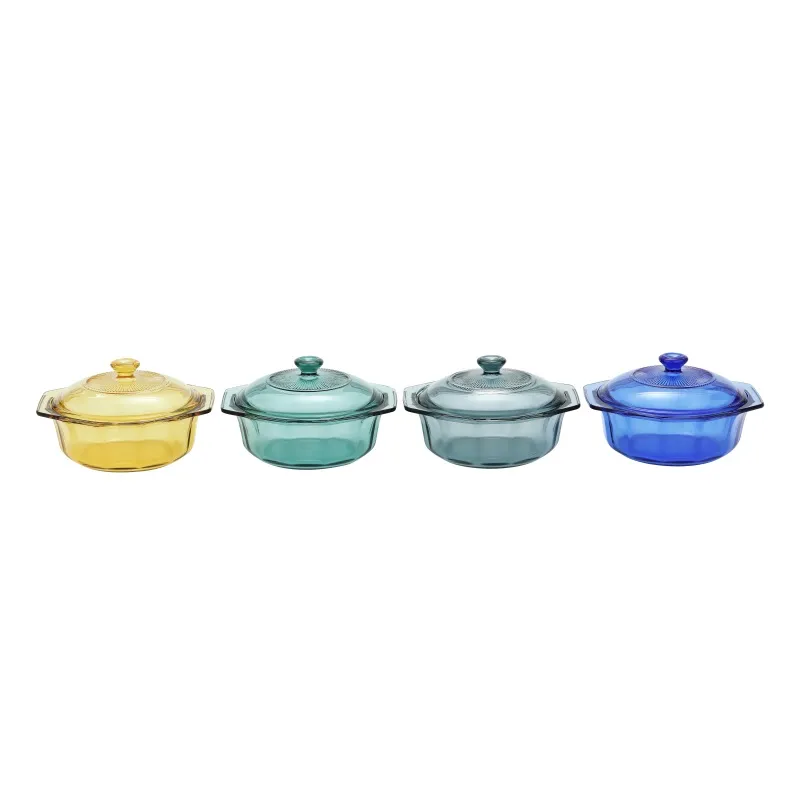
After a week of casseroles, sides, and next-day reheats, I can say the 1.0L/4Cup/34OZ Round Color Glass Casserole Dish with Glass Lid behaves like a small workhorse. It’s stained high borosilicate—think labware durability, but with a calm, modern palette (turquoise, blue, gray, amber). Sounds fancy, yet it’s surprisingly practical in the oven and on the table.
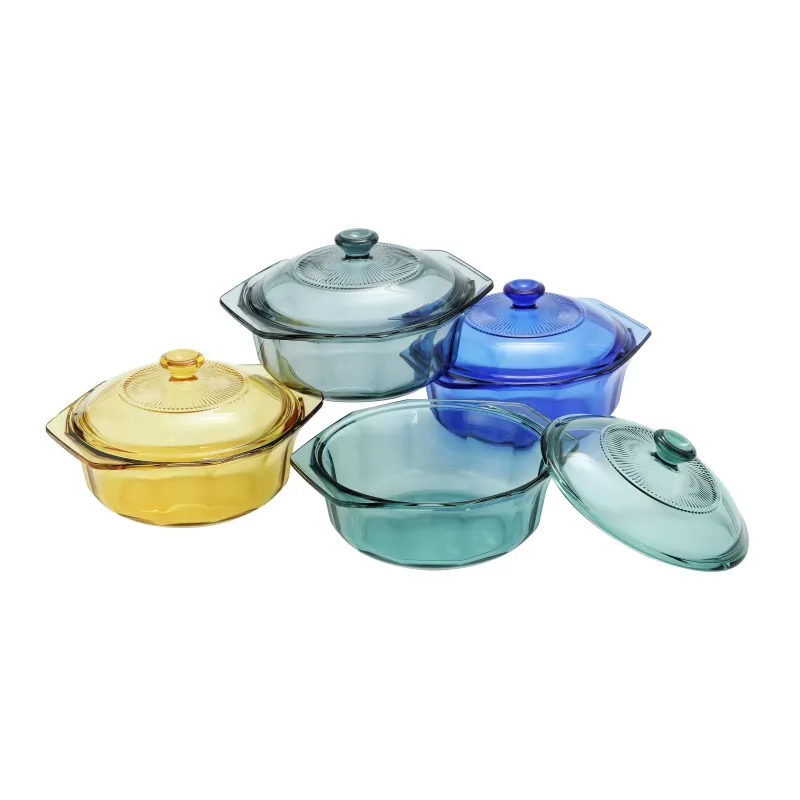
What’s driving the trend
Color-tinted borosilicate is having a moment. Home cooks want bakeware that’s tough, nonporous, and photogenic (yes, Instagram matters). Restaurants lean on thermal stability for prep-to-serve workflows. And to be honest, the lid helps: locked-in moisture, easy stacking, decent visibility.
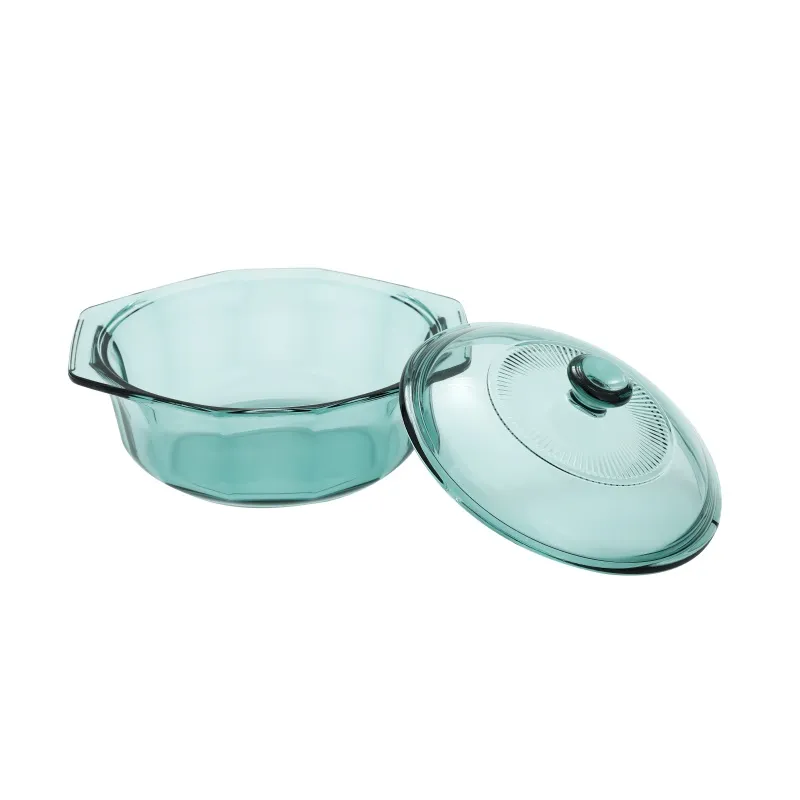
Key specifications
| Product | 1.0L/4Cup/34OZ Round Color Glass Casserole Dish with Glass Lid |
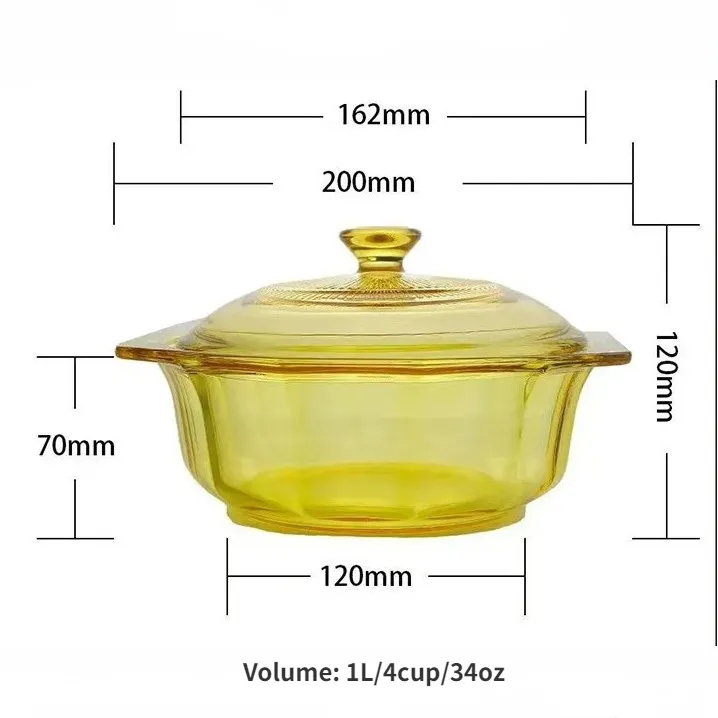
| Capacity | 1.0 L ≈ 34 oz ≈ 4 cups |
| Dimensions | 200 × 162 × 120 mm (L×W×H) |
| Material | Stained high borosilicate glass (dish + lid) |
| Colors | Turquoise, Blue, Gray, Amber |
| Thermal performance | Oven-safe; thermal shock ΔT ≈ 150°C in lab tests (real-world use may vary) |
| Use & care | Microwave & dishwasher friendly; avoid stovetop/broiler; prevent sudden extreme temperature swings |
| OEM & MOQ | OEM branding; MOQ 3000 pcs/color; 24 pcs per export carton |
How it’s made (short process flow)
Materials: high-purity silica, boron oxide, alumina; food-contact colorants integrated into the glass matrix (not a surface paint). Methods: batch melting, press-mold forming, precision lid seating, slow annealing to relieve stress, fire-polish rims. Testing: dimensional checks, anneal quality (strain polarimetry), thermal shock (EN 1183), food-contact migration (LFGB/EU 1935/2004), visual inspection.
Internal lab data: 100 cycles 180°C oven to room rack with zero cracks; ΔT pass at ≈150°C; lead/cadmium non-detect per LFGB; dishwasher 500-cycle haze rating: negligible. Service life: 3–5 years of typical home use, often longer if handled sensibly.
Where it fits
- Home kitchens: side dishes, gratins, baked oats; lid for fridge storage next day.
- Meal-prep brands: portion-control 1L sets with color-coding by recipe line.
- Hospitality/catering: mise en place, bain-marie holding (within temperature guidance).
- Retail gifting: the colorway sells—many customers say the turquoise pops on shelf displays.
Vendor snapshot and customization
Origin: Room 8019, Hengju Building, No.473 Zhonghua South Street, Shijiazhuang City, Hebei, China. Port: Tianjin. Payment: T/T, L/C. Custom options: OEM logo, color matching, gift-box design, carton marks, barcode/labeling. I guess the sweet spot is brand programs that need consistent tint and reliable lead times.
| Vendor | Yinto Glassware (OEM) | Vendor A | Vendor B |
| MOQ (color) | 3000 pcs ≈ | 5000 pcs ≈ | 2000–4000 pcs |
| Color options | Turquoise/Blue/Gray/Amber | Clear + 1–2 tints | Clear only |
| Food-contact compliance | LFGB, EU 1935/2004, internal EN 1183 test | EU only | Unspecified |
| Lead time | ≈30–45 days (order size dependent) | 45–60 days | Variable |
Quick case notes
Case #1 (Meal-kit startup): standardizing on the 1.0L/4Cup/34OZ Round Color Glass Casserole Dish with Glass Lid cut SKUs from five to two sizes; returns dropped by ~18% thanks to the lid fit and color differentiation.
Case #2 (Boutique hotel): adopted the 1.0L/4Cup/34OZ Round Color Glass Casserole Dish with Glass Lid for room-service bakes; staff liked the stackable footprint, and the lab-style glass cleaned up without lingering odors—surprisingly useful with cheesy dishes.
Certs, standards, and what to check
- Glass type reference: ASTM E438 (borosilicate classes).
- Thermal shock: EN 1183 test methodology for glassware.
- Food-contact: LFGB (DE) and EU 1935/2004 compliance documentation.
- Quality system: ISO 9001 for factory management is a plus.
- Optional: U.S. FDA FCS guidance for market access mapping.
Citations
- ASTM E438 — Standard Specification for Glasses in Laboratory Apparatus
- EN 1183 — Determination of thermal shock resistance of glass container111s
- LFGB — German Food and Feed Code (materials in contact with food)
- Regulation (EC) No 1935/2004 — Food-contact materials
- FDA — Food Contact Substances (FCS) Program
-
Ultimate Guide to Choosing Big Glass Storage Containers for Every NeedNewsApr.16,2026
-
Small Glass Lunch Containers Guide for Healthy Meal PrepNewsApr.09,2026
-
Comprehensive Guide to Choosing the Best Storage Containers for Dishes and GlassesNewsApr.07,2026
-
Selecting The Optimal 300ml Food Containers For Your Business NeedsNewsApr.04,2026
-
Discover the Benefits of Durable 3 Cup Glass Food Storage ContainersNewsMar.31,2026
-
Comprehensive Guide to Choosing Superior Glass Divided Food ContainersNewsMar.28,2026
![[Extra Large with Handle] Oven Safe Glass Food Storage Container with Airtight Locking Lid & Handle, Oven Safe Dishwasher Safe](https://images.exportstart.com/images/a1251/extra-larger-glass-container-with-snap-locking-lid-164.webp "[Extra Large with Handle] Oven Safe Glass Food Storage Container with Airtight Locking Lid & Handle, Oven Safe Dishwasher Safe")
![[All Microwave Safe] High Borosilicate Glass Food Storage Container , Oven Safe without Lid, Dishwasher Safe](https://images.exportstart.com/images/a1251/squre-glass-container-with-glass-lid-518.webp "[All Microwave Safe] High Borosilicate Glass Food Storage Container , Oven Safe without Lid, Dishwasher Safe")
![[Sliding Vent PP Lid] Borosilicate Glass Food Storage Containers with Food-grade Plastic Lid, Airtight, Leak Resistant](https://images.exportstart.com/images/a1251/glass-food-storage-container-with-airtight-lid-183.webp "[Sliding Vent PP Lid] Borosilicate Glass Food Storage Containers with Food-grade Plastic Lid, Airtight, Leak Resistant")
![[Large Skylight Glass Lid] Glass Food Storage Container, Oven Safe with Lid, BPA Free, 100% Leak resistant](https://images.exportstart.com/images/a1251/glass-lid-food-storage-container-1-1-196.webp "[Large Skylight Glass Lid] Glass Food Storage Container, Oven Safe with Lid, BPA Free, 100% Leak resistant")
![[Colorful Vent PP Lid] Glass Food Storage Container, BPA Free, Leakproof, Dishwasher Safe](https://images.exportstart.com/images/a1251/002-1-639.webp "[Colorful Vent PP Lid] Glass Food Storage Container, BPA Free, Leakproof, Dishwasher Safe")
![[Color Vent PP Lid] Borosilicate Glass Food Storage Container, Leakproof, Dishwasher Safe](https://images.exportstart.com/images/a1251/1-941.webp "[Color Vent PP Lid] Borosilicate Glass Food Storage Container, Leakproof, Dishwasher Safe")
![[Vacuum AS] Food Storage Container with Pump](https://images.exportstart.com/images/a1251/7-1-397.webp "[Vacuum AS] Food Storage Container with Pump")