 هاتف: +86 18903393212
 بريد إلكتروني: tina@yintoglassware.com

Double wall insulated glass coffee mugs—stay hot longer
Why baristas are switching to double wall insulated glass coffee mugs
Glass drinkware has quietly leveled up. Cafés want heat retention without clunky ceramics, and home users want that floating-espresso look—without burnt fingers. In fact, the latest double-wall borosilicate builds do both. I’ve toured a few factories in Hebei over the years, and the difference today is tighter annealing and better QC on the vent seal. Small details, big impact.
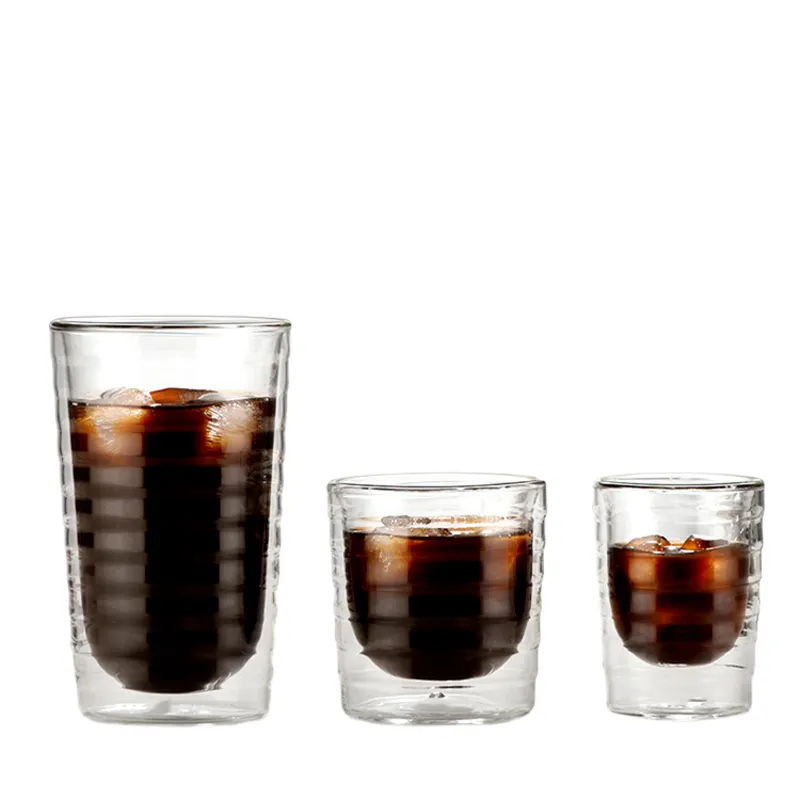
Product snapshot and specs
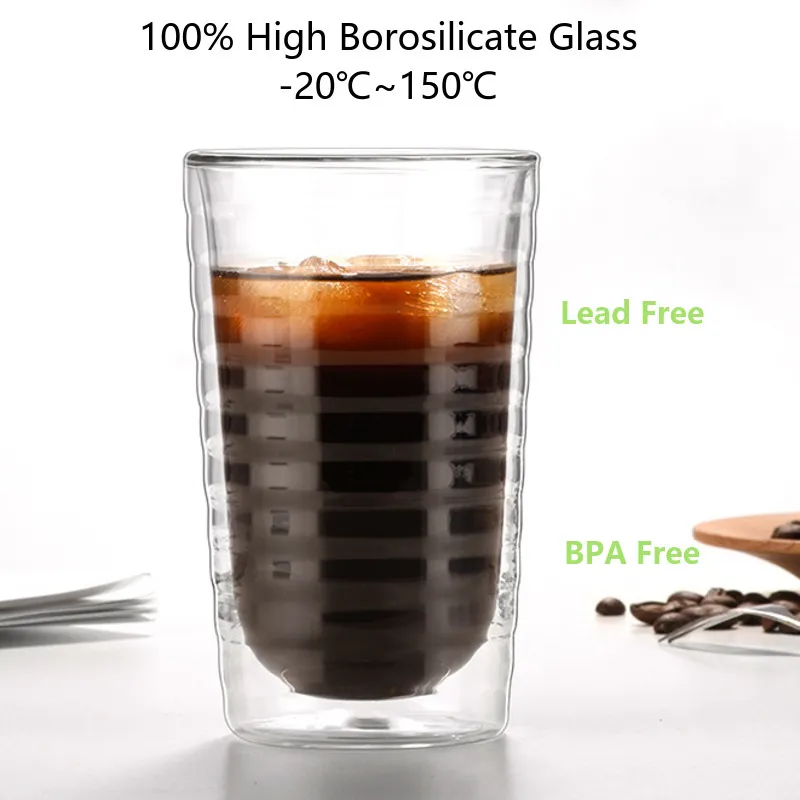
Yinto’s Double Wall Insulated Glass Coffee Mugs use 100% high borosilicate glass. Clear, lightweight, and surprisingly tough in daily café grind. Here’s the quick spec—real-world use may vary, of course:
| Parameter | Typical Value |
|---|---|
| Material | 100% High Borosilicate (≈3.3×10⁻⁶/K) |
| Capacities | 80 ml, 150 ml, 350 ml |
| Wall / Gap | ≈1.8±0.3 mm wall; ≈3–5 mm air gap |
| Temperature Range | -20°C to 150°C (gradual changes best) |
| Thermal Shock | ΔT ≥120°C (EN 1183 lab method) |
| Dishwasher Resistance | ≥500 cycles target (EN 12875-1) |
| Food-Contact Compliance | LFGB, FDA 21 CFR (supplier-declared) |
| موك | 500 pcs/size; custom brand available |
| Service Life | ≈2–5 years in cafés (handling dependent) |
| التعبئة والتغليف | Standard international or custom packaging |
How they’re made (and tested)
Materials are mixed (silica, boric oxide, alumina), melted, and either mouth-blown or precision press-blown. The inner cup is formed first; the outer shell follows; then a micro-vent in the base is flame-sealed after annealing. QC Dimensional checks, stress birefringence, leak test on the vent, thermal-shock per EN 1183, and dishwasher cycles under EN 12875-1. Truth be told, the annealing curve is the make-or-break step.
Advantages you feel: better heat retention, cooler touch, and zero condensation on cold brew. Many customers say crema looks almost “suspended”—a small barista flex that photographs well.
Use cases and field notes
- Espresso flights (80 ml), flat whites and tea (150 ml), generous lattes or iced drinks (350 ml).
- Hotels and office pantries favor them for the upscale look; DTC brands love the giftable packaging. In one boutique café rollout, switching to double wall insulated glass coffee mugs cut “too-hot-to-hold” complaints dramatically, and staff reported fewer chips thanks to lighter weight handling.
Vendor landscape (quick comparison)
| ميزة | Yinto Glassware | Competitor A | Competitor B |
|---|---|---|---|
| Glass type | Borosilicate 3.3 | Borosilicate (unspecified) | Soda-lime in some SKUs |
| موك | ≈500 pcs/size | 1,000–2,000+ | No MOQ but mixed quality |
| Lead time | ≈15–30 days | ≈30–45 days | Stock-dependent |
| Certifications | LFGB/FDA docs on file | FDA only | Varies by seller |
| Customization | Logo, decal, frosted, gift box | Limited print | Minimal |
Customization and branding
MOQ is 500 pcs/size with custom brand. Options include laser etch or decal, frosted finish, colored handle, and retail-ready boxes. For corporate gifts, I’d suggest the 350 ml with a low-contrast etch—subtle, durable, and dishwasher-friendly.
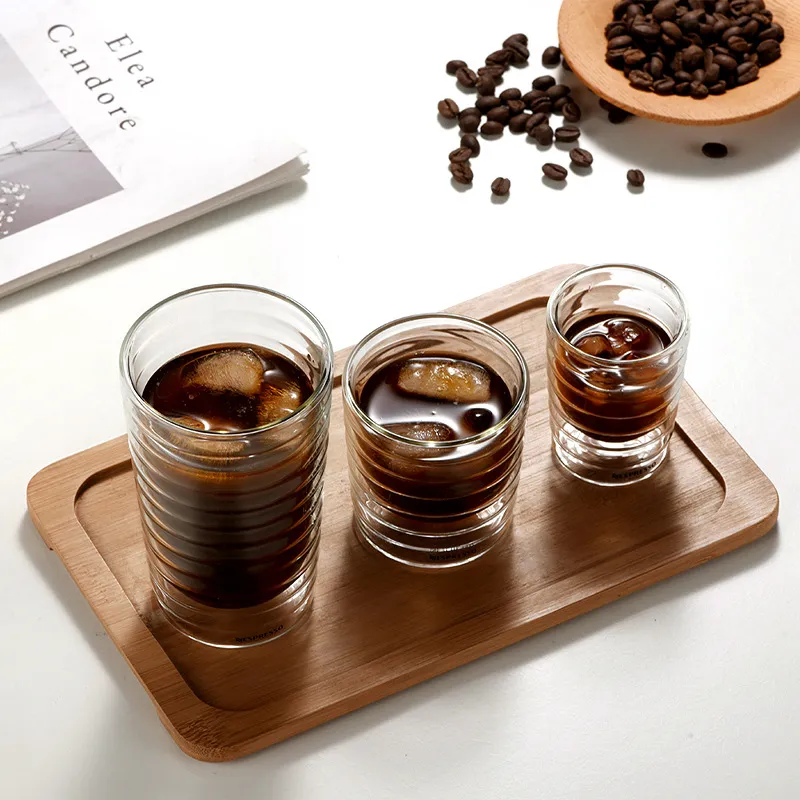
What to watch for (buyer’s checklist)
- Ask for EN 1183 thermal-shock and LFGB/FDA test reports by lot, not just a generic PDF.
- Inspect the vent seal: neat, centered, no micro-cracks.
- Request a sample set and run your own ΔT test (espresso shot into room-temp mug).
- Packaging matters: drop-test data from your courier saves headaches.
Bottom line: if you need reliable double wall insulated glass coffee mugs with café-grade performance and retail polish, borosilicate is still the sweet spot.
Citations
- EN 1183: Glassware — Testing thermal shock resistance
- EN 12875-1: Mechanical dishwashing resistance of tableware
- LFGB (Germany) and EU Reg. (EC) No 1935/2004 for food contact materials
- FDA 21 CFR 175–178: Indirect food additives (glass contact compliance)
- ISO 3585: Borosilicate glass 3.3 — Properties
-
Ultimate Guide to Choosing Big Glass Storage Containers for Every NeedأخبارApr.16,2026
-
Small Glass Lunch Containers Guide for Healthy Meal PrepأخبارApr.09,2026
-
Comprehensive Guide to Choosing the Best Storage Containers for Dishes and GlassesأخبارApr.07,2026
-
Selecting The Optimal 300ml Food Containers For Your Business NeedsأخبارApr.04,2026
-
Discover the Benefits of Durable 3 Cup Glass Food Storage ContainersأخبارMar.31,2026
-
Comprehensive Guide to Choosing Superior Glass Divided Food ContainersأخبارMar.28,2026
![[Extra Large with Handle] Oven Safe Glass Food Storage Container with Airtight Locking Lid & Handle, Oven Safe Dishwasher Safe](https://images.exportstart.com/images/a1251/extra-larger-glass-container-with-snap-locking-lid-164.webp "[Extra Large with Handle] Oven Safe Glass Food Storage Container with Airtight Locking Lid & Handle, Oven Safe Dishwasher Safe")
![[All Microwave Safe] High Borosilicate Glass Food Storage Container , Oven Safe without Lid, Dishwasher Safe](https://images.exportstart.com/images/a1251/squre-glass-container-with-glass-lid-518.webp "[All Microwave Safe] High Borosilicate Glass Food Storage Container , Oven Safe without Lid, Dishwasher Safe")
![[Sliding Vent PP Lid] Borosilicate Glass Food Storage Containers with Food-grade Plastic Lid, Airtight, Leak Resistant](https://images.exportstart.com/images/a1251/glass-food-storage-container-with-airtight-lid-183.webp "[Sliding Vent PP Lid] Borosilicate Glass Food Storage Containers with Food-grade Plastic Lid, Airtight, Leak Resistant")
![[Large Skylight Glass Lid] Glass Food Storage Container, Oven Safe with Lid, BPA Free, 100% Leak resistant](https://images.exportstart.com/images/a1251/glass-lid-food-storage-container-1-1-196.webp "[Large Skylight Glass Lid] Glass Food Storage Container, Oven Safe with Lid, BPA Free, 100% Leak resistant")
![[Colorful Vent PP Lid] Glass Food Storage Container, BPA Free, Leakproof, Dishwasher Safe](https://images.exportstart.com/images/a1251/002-1-639.webp "[Colorful Vent PP Lid] Glass Food Storage Container, BPA Free, Leakproof, Dishwasher Safe")
![[Color Vent PP Lid] Borosilicate Glass Food Storage Container, Leakproof, Dishwasher Safe](https://images.exportstart.com/images/a1251/1-941.webp "[Color Vent PP Lid] Borosilicate Glass Food Storage Container, Leakproof, Dishwasher Safe")
![[Vacuum AS] Food Storage Container with Pump](https://images.exportstart.com/images/a1251/7-1-397.webp "[Vacuum AS] Food Storage Container with Pump")