 TEL: +86 18903393212
 Email: tina@yintoglassware.com

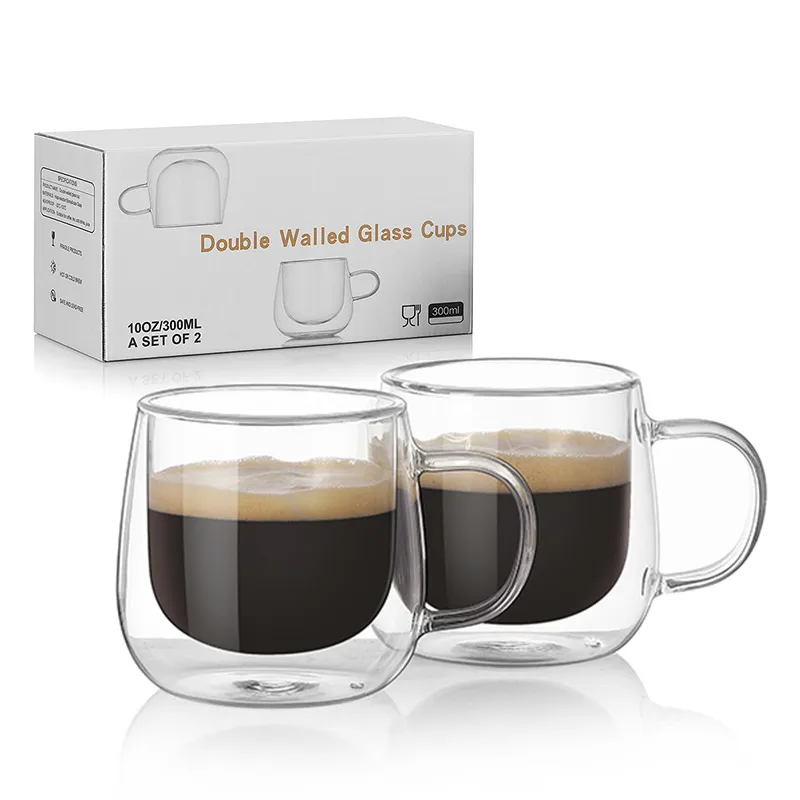
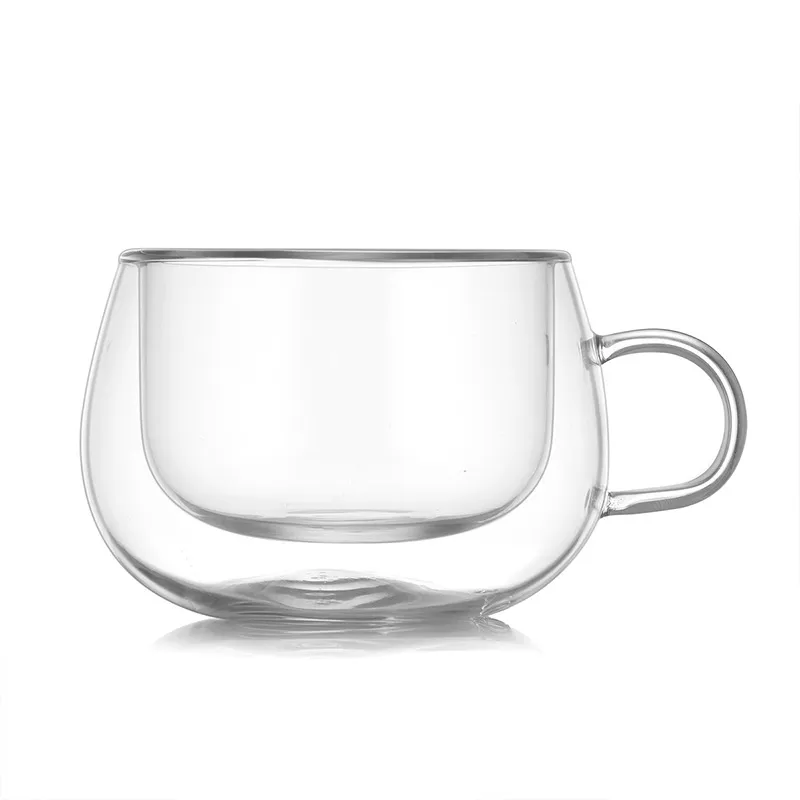
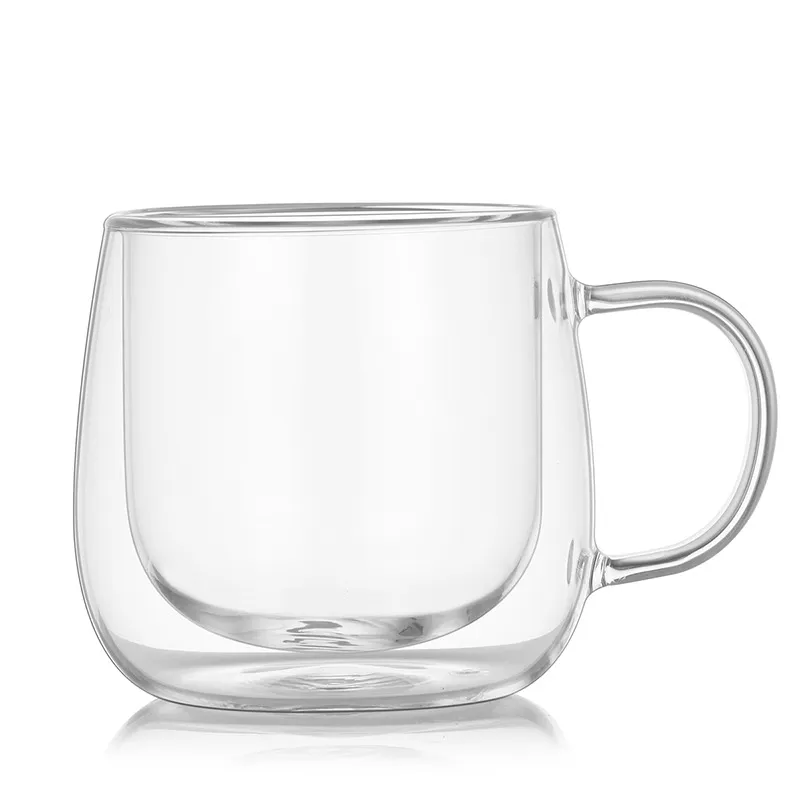
Double Wall Mug with Handle – Insulated, Cool-Touch Glass
Insider’s Guide to the Double-Wall Glass Mug with Handle
If you’re sourcing a double wall mug with handle for retail or café programs, here’s what buyers and baristas quietly compare behind the scenes. I’ve toured more than a few glassworks, and—surprisingly—the difference between “good” and “great” often comes down to materials and post-annealing discipline.
What’s trending (and why it matters)
- Clear minimalism: customers want to see crema and tea color gradients.
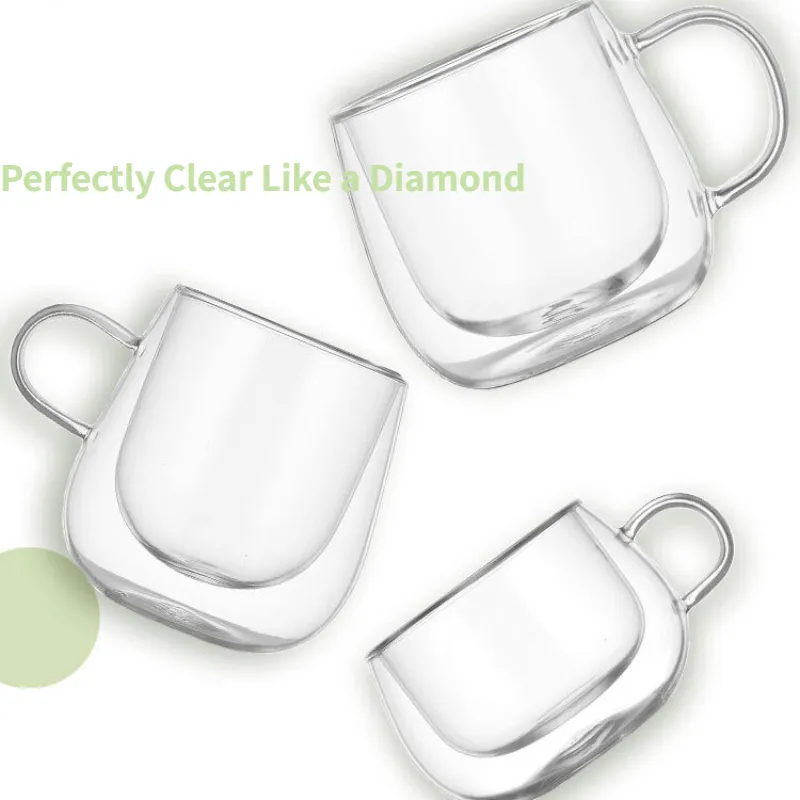
- Thermal comfort: anti-scald grip and longer heat retention without metal taste.
- Lightweight yet durable: borosilicate glass 3.3 is the industry workhorse.
- Brandable surfaces: cafés and DTC brands want tasteful, low-ink logos.
Product specs (field-tested, not just lab)
| Parameter | Specification (≈ real-world) |
|---|---|
| Material | 100% High Borosilicate Glass (3.3 coeff.) |
| Structure | Double-wall, air-insulated; anti-scald handle |
| Capacity | 130 ml, 250 ml, 300 ml |
| Color | Clear |
| Thermal range | ≈ -20°C to 150°C (normal use) |
| Dishwasher cycles | >500 cycles (EN 12875 guidance; use mild detergents) |
| Certifications | FDA food-contact, LFGB, CA Prop 65 compliant |
| Branding | Custom brand; pad print/laser/decal |
| MOQ | 500 pcs/size |
In testing, a 250 ml unit kept 65°C coffee above 50°C for ≈35–45 minutes in a 20°C room—obviously, real-world use may vary.
How it’s made (quick process flow)
- Materials: lab-grade borosilicate tubes and gob stock.
- Forming: inner cup is blow-formed; outer shell shaped; handle pulled and attached.
- Sealing: air gap closed at base; no vacuum, but the trapped air insulates.
- Annealing: controlled cooling to reduce residual stress (this is crucial).
- Finishing: rim fire-polish, logo application, QC.
- Testing: thermal shock ΔT tests, dishwasher resistance, migration tests (LFGB/FDA).
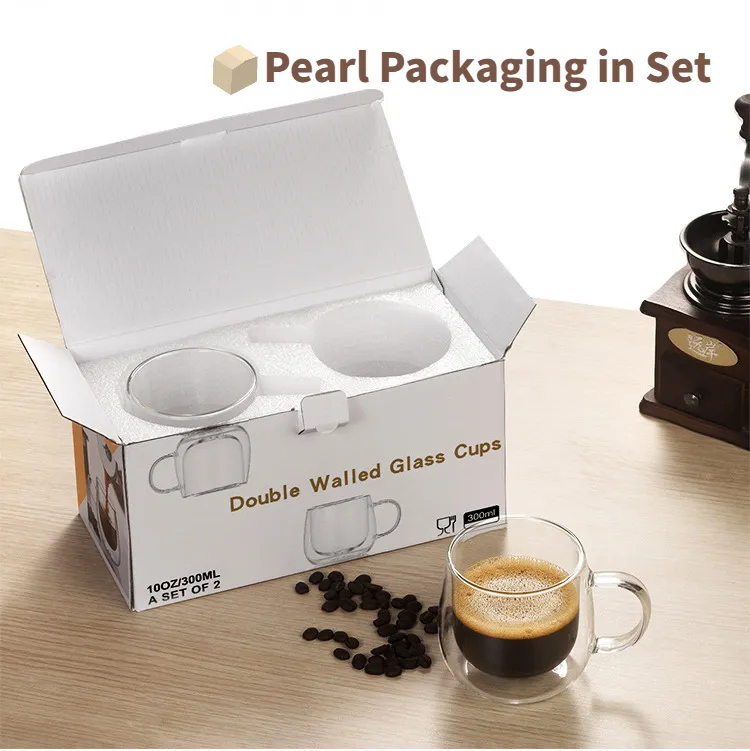
- Packing: standard international packaging or custom retail boxing.
- Service life: cafés report 2–3 years with normal handling.
- Industries: coffee chains, boutique tea houses, hotel in-room programs, corporate gifting.
Applications and user feedback
130 ml is a hit for espresso/macchiato; 250–300 ml suits flat whites and herbal tea. Many customers say the grip feels “cooler than expected,” and baristas like the clear signal when milk texture is right. To be honest, once you go double wall mug with handle, it’s hard to return to single-wall glass.
Vendor comparison (what buyers actually compare)
| Vendor | MOQ | Lead Time | Certs | Customization |
|---|---|---|---|---|
| Yinto Glassware (Shijiazhuang, Hebei; Room 8019, Hengju Bldg., No.473 Zhonghua S. St.) | 500 pcs/size | ≈ 20–30 days | FDA, LFGB, Prop 65 | Brand, packaging, decals |
| Competitor A | 1,000+ | 30–45 days | FDA | Basic logo only |
| Competitor B | 500–800 | 25–35 days | FDA, LFGB | Logo + sleeve box |
Customization & QA
- Logos: single-color pad print (best), ceramic decal for multi-color.
- Packaging: standard export carton or gift box with foam; drop-test to ISTA 3A is common.
- Tests: thermal shock per ISO 3585 family guidance; dishwasher resistance (EN 12875); food-contact migration per LFGB/FDA.
Mini case studies
Specialty café chain (EMEA): 5,000 units of 250 ml, decal logo. Breakage in transit: 0.6% after packaging tweak; NPS rose as drinks “stayed hot longer without burning fingers.”
D2C tea brand (NA): 300 ml with gift box. Returns dropped by ≈28% after annealing and rim inspection step was tightened. Actually, small tweaks matter.
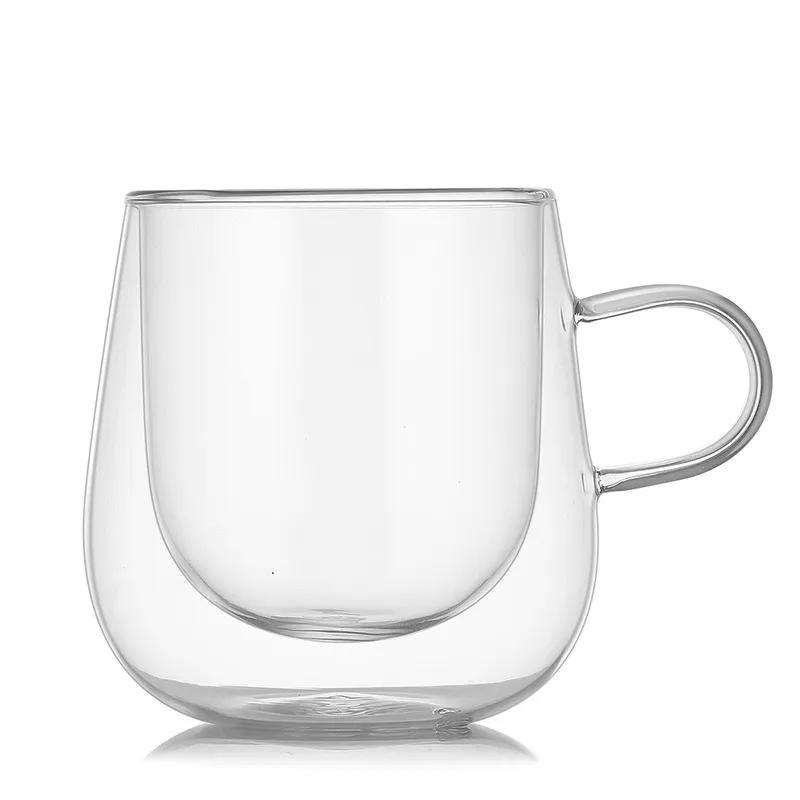
If you’re weighing a double wall mug with handle for your next program: start with capacity mix (130/250/300 ml), confirm branding method, then insist on thermal-shock and dishwasher data in the QC report. It seems obvious, but many buyers skip that part.
References
- ISO 3585: Borosilicate glass 3.3 — Properties and applications. https://www.iso.org/standard/54884.html
- EN 12875: Mechanical dishwashing resistance of utensils. https://standards.cen.eu
- FDA Food Contact Compliance (General). https://www.fda.gov/food/packaging-food-contact-substances-fcs
- LFGB (German Food & Feed Code) Guidance. https://www.bvl.bund.de
- California Proposition 65. https://oehha.ca.gov/proposition-65
-
Ultimate Guide to Choosing Big Glass Storage Containers for Every NeedNewsApr.16,2026
-
Small Glass Lunch Containers Guide for Healthy Meal PrepNewsApr.09,2026
-
Comprehensive Guide to Choosing the Best Storage Containers for Dishes and GlassesNewsApr.07,2026
-
Selecting The Optimal 300ml Food Containers For Your Business NeedsNewsApr.04,2026
-
Discover the Benefits of Durable 3 Cup Glass Food Storage ContainersNewsMar.31,2026
-
Comprehensive Guide to Choosing Superior Glass Divided Food ContainersNewsMar.28,2026
![[Extra Large with Handle] Oven Safe Glass Food Storage Container with Airtight Locking Lid & Handle, Oven Safe Dishwasher Safe](https://images.exportstart.com/images/a1251/extra-larger-glass-container-with-snap-locking-lid-164.webp "[Extra Large with Handle] Oven Safe Glass Food Storage Container with Airtight Locking Lid & Handle, Oven Safe Dishwasher Safe")
![[All Microwave Safe] High Borosilicate Glass Food Storage Container , Oven Safe without Lid, Dishwasher Safe](https://images.exportstart.com/images/a1251/squre-glass-container-with-glass-lid-518.webp "[All Microwave Safe] High Borosilicate Glass Food Storage Container , Oven Safe without Lid, Dishwasher Safe")
![[Sliding Vent PP Lid] Borosilicate Glass Food Storage Containers with Food-grade Plastic Lid, Airtight, Leak Resistant](https://images.exportstart.com/images/a1251/glass-food-storage-container-with-airtight-lid-183.webp "[Sliding Vent PP Lid] Borosilicate Glass Food Storage Containers with Food-grade Plastic Lid, Airtight, Leak Resistant")
![[Large Skylight Glass Lid] Glass Food Storage Container, Oven Safe with Lid, BPA Free, 100% Leak resistant](https://images.exportstart.com/images/a1251/glass-lid-food-storage-container-1-1-196.webp "[Large Skylight Glass Lid] Glass Food Storage Container, Oven Safe with Lid, BPA Free, 100% Leak resistant")
![[Colorful Vent PP Lid] Glass Food Storage Container, BPA Free, Leakproof, Dishwasher Safe](https://images.exportstart.com/images/a1251/002-1-639.webp "[Colorful Vent PP Lid] Glass Food Storage Container, BPA Free, Leakproof, Dishwasher Safe")
![[Color Vent PP Lid] Borosilicate Glass Food Storage Container, Leakproof, Dishwasher Safe](https://images.exportstart.com/images/a1251/1-941.webp "[Color Vent PP Lid] Borosilicate Glass Food Storage Container, Leakproof, Dishwasher Safe")
![[Vacuum AS] Food Storage Container with Pump](https://images.exportstart.com/images/a1251/7-1-397.webp "[Vacuum AS] Food Storage Container with Pump")