 TEL: +86 18903393212
 Email: tina@yintoglassware.com

Double Wall Mug with Handle - Insulated Borosilicate Glass
The Quiet Rise of the Double-Walled Glass Era (and why the handle matters)
If you’ve ever burned your fingers on a pretty cup, you’ll get why the modern double wall mug with handle is quietly taking over specialty coffee bars and minimalist kitchens. I’ve been touring factories and cafés for years; the shift from single-wall ceramics to high-borosilicate glass is real—and honestly, overdue.
Product at a glance
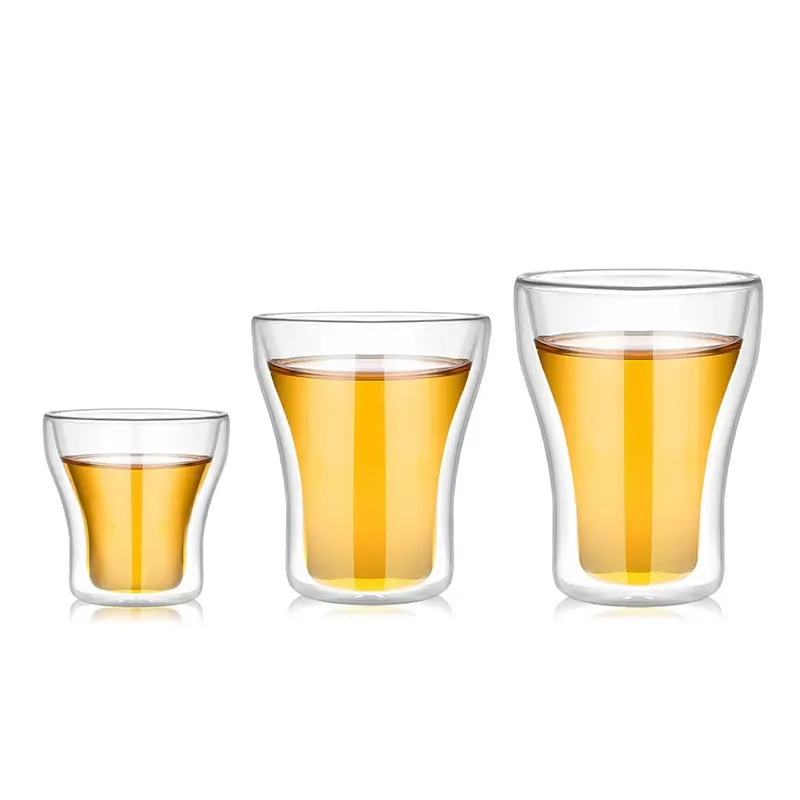
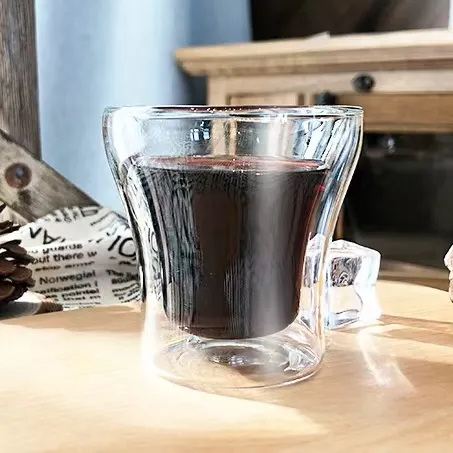
Meet the High Borosilicate Double-walled Volcano Glass Cup—made in Shijiazhuang, Hebei, China (Room 8019, Hengju Building, No.473 Zhonghua South Street). It’s clear, insulated, and yes, available in handled and handleless variants. The double wall traps heat, the outer wall stays cool, and the volcano profile gives a satisfying pour swirl—baristas notice these things.
| Item | Specification (real-world use may vary) |
|---|---|
| Material | 100% High Borosilicate Glass (≈3.3 type, ISO 3585) |
| Capacity options | 80 ml, 200 ml, 250 ml |
| Features | Double-wall insulation, anti-scald, heat preservation; ergonomic glass handle option |
| Thermal range | -20°C to 150°C; thermal shock ΔT ≈ 120°C (EN 1183 methods) |
| Certifications | FDA compliant, LFGB, EU 1935/2004; BPA-free, lead-free |
| Branding & MOQ | Custom brand; MOQ ≈ 500 pcs/size |
| Dishwasher/Microwave | Top-rack dishwasher safe; microwave safe (no metal) |
Process flow and testing (the nerdy bit)
Materials: high-boro silica-soda mix refined for low expansion. Methods: tube drawing → mouth-blown or precision mold forming → inner core shaping → handle welding (oxy-fuel) → vacuum seal of double wall → annealing → rim fire-polish. Testing: thermal shock per EN 1183, visual stress check (polariscopes), water-tightness, and contact compliance (LFGB, EU 1935/2004). Service life? In cafés, around 2–4 years of heavy rotation; at home, 5+ years if you’re not clattering it in the sink (we all do, sometimes).
Internal test snapshot: 30 thermal-shock cycles (20°C to 90°C) with no cracks; heat retention vs. single-wall glass shows latte at 65°C stays above 50°C for ≈15 minutes versus ≈8 minutes on a single wall. To be honest, that comfort window is what people feel, even if they don’t measure it.
Where it’s used
Specialty coffee bars, boutique hotels, tea houses, wine tastings (the clarity helps), corporate gifting, and home espresso setups. A double wall mug with handle especially shines for Americano, long blacks, hot chocolates, and mulled drinks—steady heat, happier hands.
Advantages folks actually notice
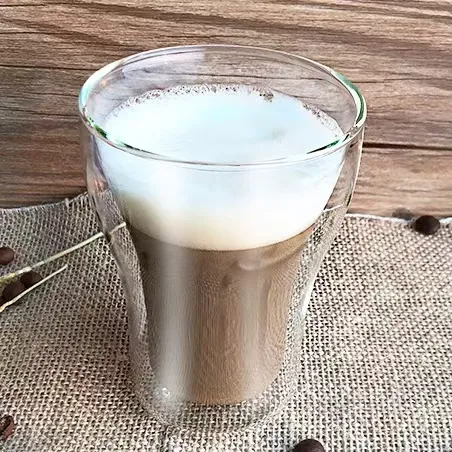
- Cool-touch exterior, even with boiling water.
- Flavor neutrality; borosilicate doesn’t smuggle in off-notes.
- Condensation-free iced drinks—no ring marks, fewer napkins.
- Clear body: crema, color, and layers look… well, delicious.
Customer feedback snippets: “No more burnt fingertips,” “Guests always ask where we got them,” “Surprisingly light.”
Vendor comparison (what buyers ask me, constantly)
| Vendor | Certs & Docs | Customization | Lead Time | QC & Warranty |
|---|---|---|---|---|
| Yinto Glassware (Hebei) | FDA/LFGB/EU 1935/2004; test reports on request | Logo, handle style, color frit, box design | ≈ 20–30 days after approval | AQL sampling; 1-year craft warranty |
| Generic Importer A | Basic COA; limited food-contact docs | Logo only | ≈ 35–45 days | Spot checks; no formal warranty |
| Boutique Studio B | Small-batch artisan notes; partial compliance | High customization; higher unit cost | ≈ 45–60 days | Hand-inspected; batch replacement |
Customization and add-ons
Options include handle geometry (rounded vs. angular), sandblasted or ceramic-ink logos, laser micro-etch fill lines for cafés, and gift packaging. For hospitality, I guess stackability matters—so request a slightly tapered outer wall if that’s a priority.
Mini case studies
Berlin coffee chain: standardized 200 ml handled units; reported 23% drop in cup-related hand complaints and faster drink photography (yes, that’s a metric now). Singapore tech firm: 1,200 custom-branded sets as gifts; sub-2% transit breakage with reinforced cartons.
In short, a double wall mug with handle balances barista ergonomics, guest comfort, and brand aesthetics—without shouting for attention. Subtle wins tend to stick.
Authoritative citations
- ISO 3585: Borosilicate Glass 3.3 — Properties and classification.
- EN 1183: Glass in building — Testing resistance to thermal shock.
- Regulation (EC) No 1935/2004 — Materials and articles intended to come into contact with food.
- U.S. FDA Food Contact Compliance Guidance (glass articles; inert materials).
- LFGB (Germany) — Lebensmittel-, Bedarfsgegenstände- und Futtermittelgesetzbuch compliance for food-contact items.
-
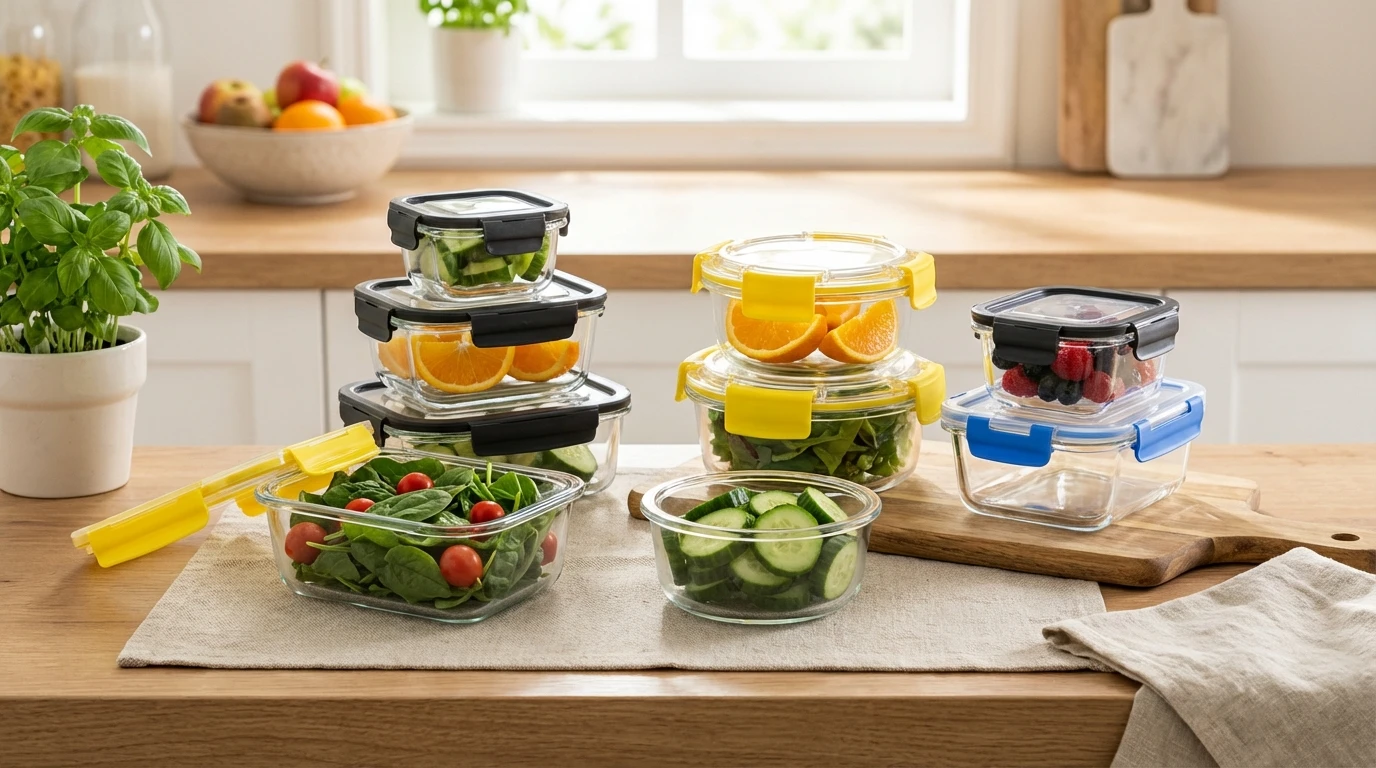
Ultimate Guide to Choosing Big Glass Storage Containers for Every NeedNewsApr.16,2026
-
Small Glass Lunch Containers Guide for Healthy Meal PrepNewsApr.09,2026
-
Comprehensive Guide to Choosing the Best Storage Containers for Dishes and GlassesNewsApr.07,2026
-
Selecting The Optimal 300ml Food Containers For Your Business NeedsNewsApr.04,2026
-
Discover the Benefits of Durable 3 Cup Glass Food Storage ContainersNewsMar.31,2026
-
Comprehensive Guide to Choosing Superior Glass Divided Food ContainersNewsMar.28,2026
![[Extra Large with Handle] Oven Safe Glass Food Storage Container with Airtight Locking Lid & Handle, Oven Safe Dishwasher Safe](https://images.exportstart.com/images/a1251/extra-larger-glass-container-with-snap-locking-lid-164.webp "[Extra Large with Handle] Oven Safe Glass Food Storage Container with Airtight Locking Lid & Handle, Oven Safe Dishwasher Safe")
![[All Microwave Safe] High Borosilicate Glass Food Storage Container , Oven Safe without Lid, Dishwasher Safe](https://images.exportstart.com/images/a1251/squre-glass-container-with-glass-lid-518.webp "[All Microwave Safe] High Borosilicate Glass Food Storage Container , Oven Safe without Lid, Dishwasher Safe")
![[Sliding Vent PP Lid] Borosilicate Glass Food Storage Containers with Food-grade Plastic Lid, Airtight, Leak Resistant](https://images.exportstart.com/images/a1251/glass-food-storage-container-with-airtight-lid-183.webp "[Sliding Vent PP Lid] Borosilicate Glass Food Storage Containers with Food-grade Plastic Lid, Airtight, Leak Resistant")
![[Large Skylight Glass Lid] Glass Food Storage Container, Oven Safe with Lid, BPA Free, 100% Leak resistant](https://images.exportstart.com/images/a1251/glass-lid-food-storage-container-1-1-196.webp "[Large Skylight Glass Lid] Glass Food Storage Container, Oven Safe with Lid, BPA Free, 100% Leak resistant")
![[Colorful Vent PP Lid] Glass Food Storage Container, BPA Free, Leakproof, Dishwasher Safe](https://images.exportstart.com/images/a1251/002-1-639.webp "[Colorful Vent PP Lid] Glass Food Storage Container, BPA Free, Leakproof, Dishwasher Safe")
![[Color Vent PP Lid] Borosilicate Glass Food Storage Container, Leakproof, Dishwasher Safe](https://images.exportstart.com/images/a1251/1-941.webp "[Color Vent PP Lid] Borosilicate Glass Food Storage Container, Leakproof, Dishwasher Safe")
![[Vacuum AS] Food Storage Container with Pump](https://images.exportstart.com/images/a1251/7-1-397.webp "[Vacuum AS] Food Storage Container with Pump")