 दूरभाष: +86 18903393212
 ईमेल: tina@yintoglassware.com

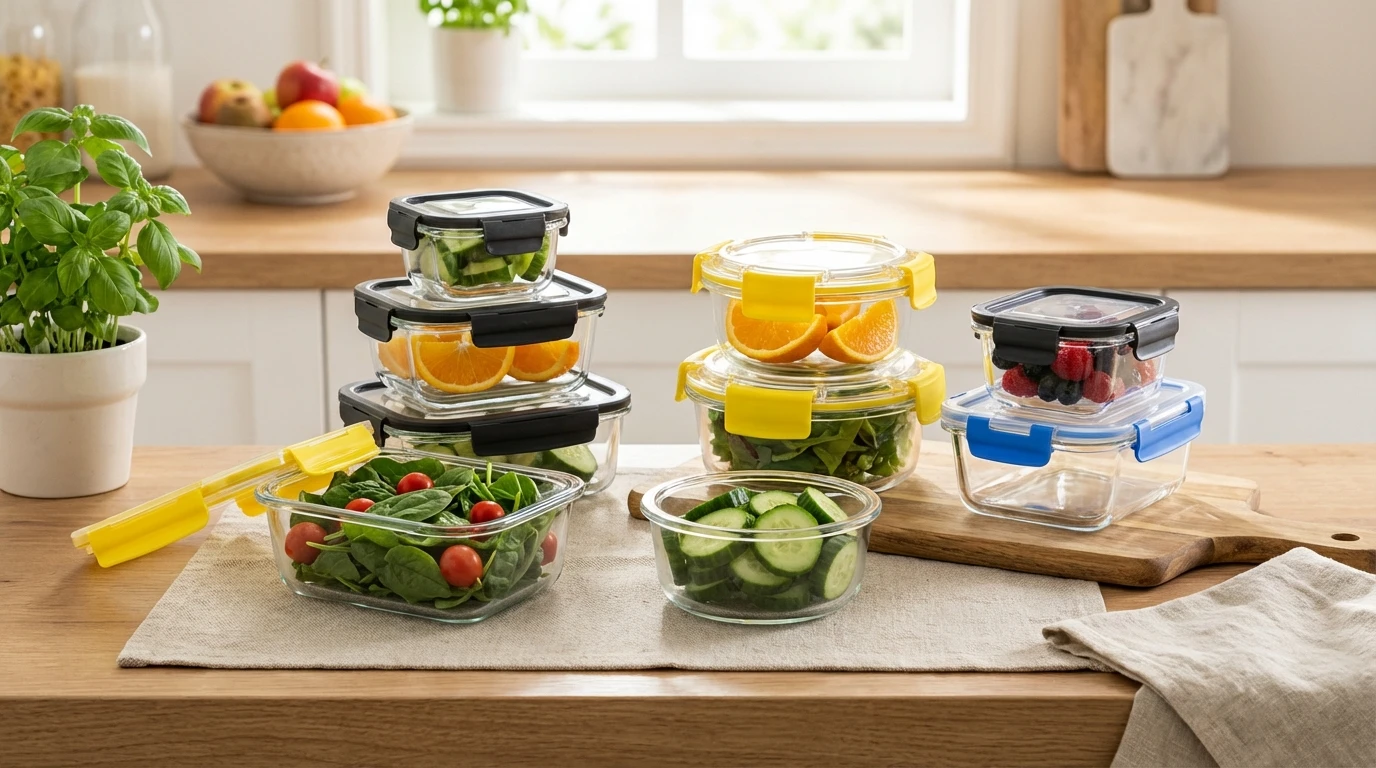
Looking for wholesale bamboo glass jars with Acacia lid: airtight, reusable
What buyers really mean by “bamboo glass jars” (and why acacia lids are winning)
Search interest for wholesale bamboo glass jars has exploded in the last two years. But here’s the on-the-ground truth from factory visits and buyer calls: many projects now specify acacia lids instead of bamboo. Why? Better hardness, richer grain, and steadier supply, while keeping the natural look and airtight function that retailers love.
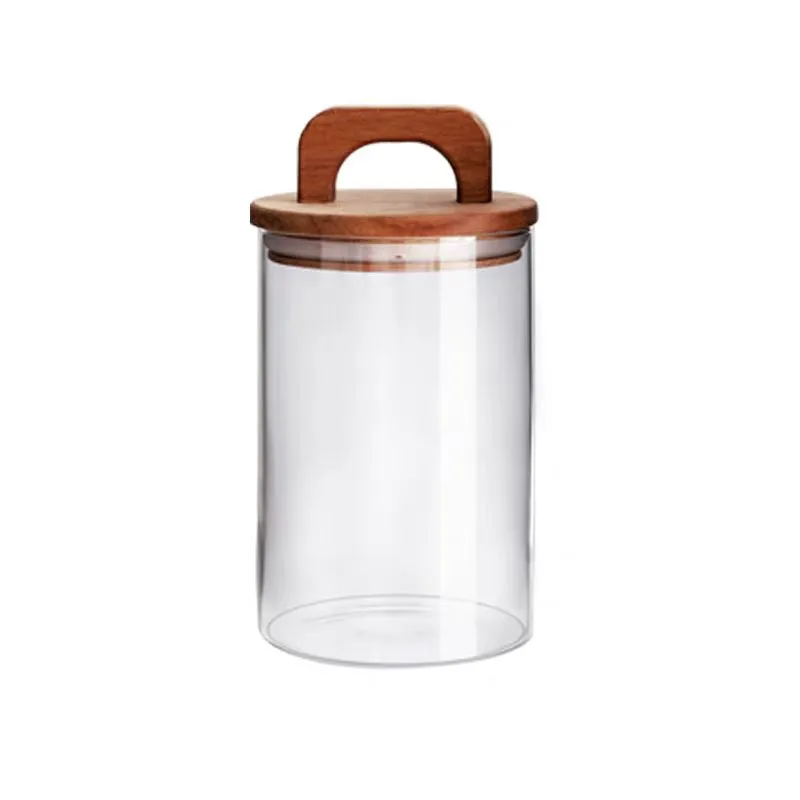
Product snapshot: Glass Storage Jar with Acacia Handle Lid
Made by Hebei Yinto IMP.&EXP. Trading Co., Ltd,this series pairs 100% high borosilicate glass with a solid acacia lid and silicone gasket. It’s microwave/freezer/dishwasher safe (glass only), rated -20℃/68℉ to 150℃/302℉ with ≈120℃ thermal-shock endurance. It’s food-grade, BPA-free, lead-free; FDA and LFGB compliant. In real-world café testing, jars stayed clear and odor-neutral after months of use.
| Spec | Details (≈, real-world use may vary) |
|---|---|
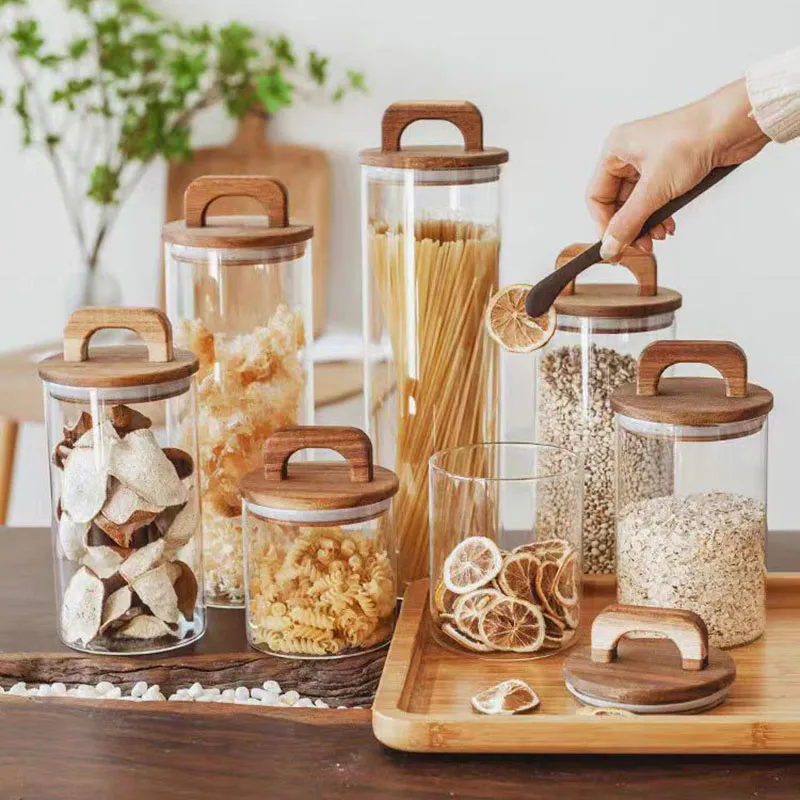
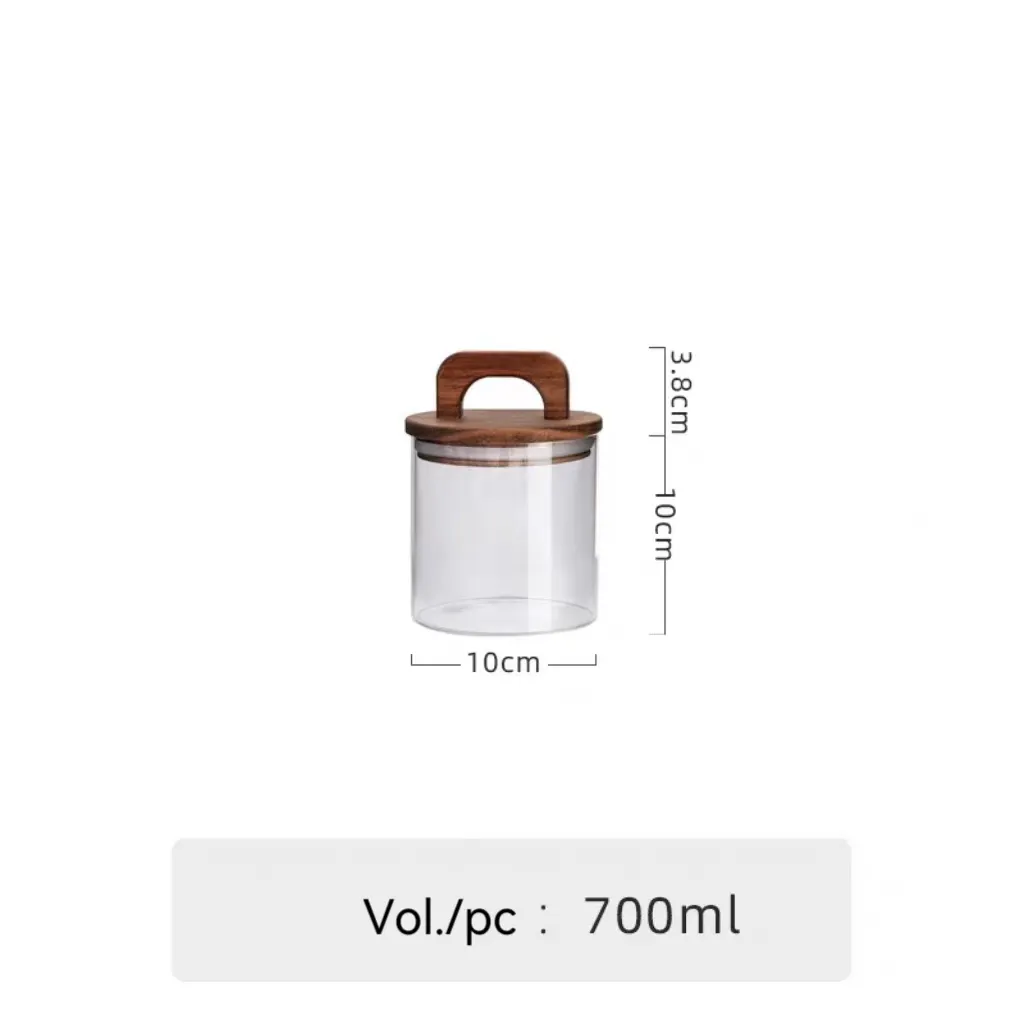
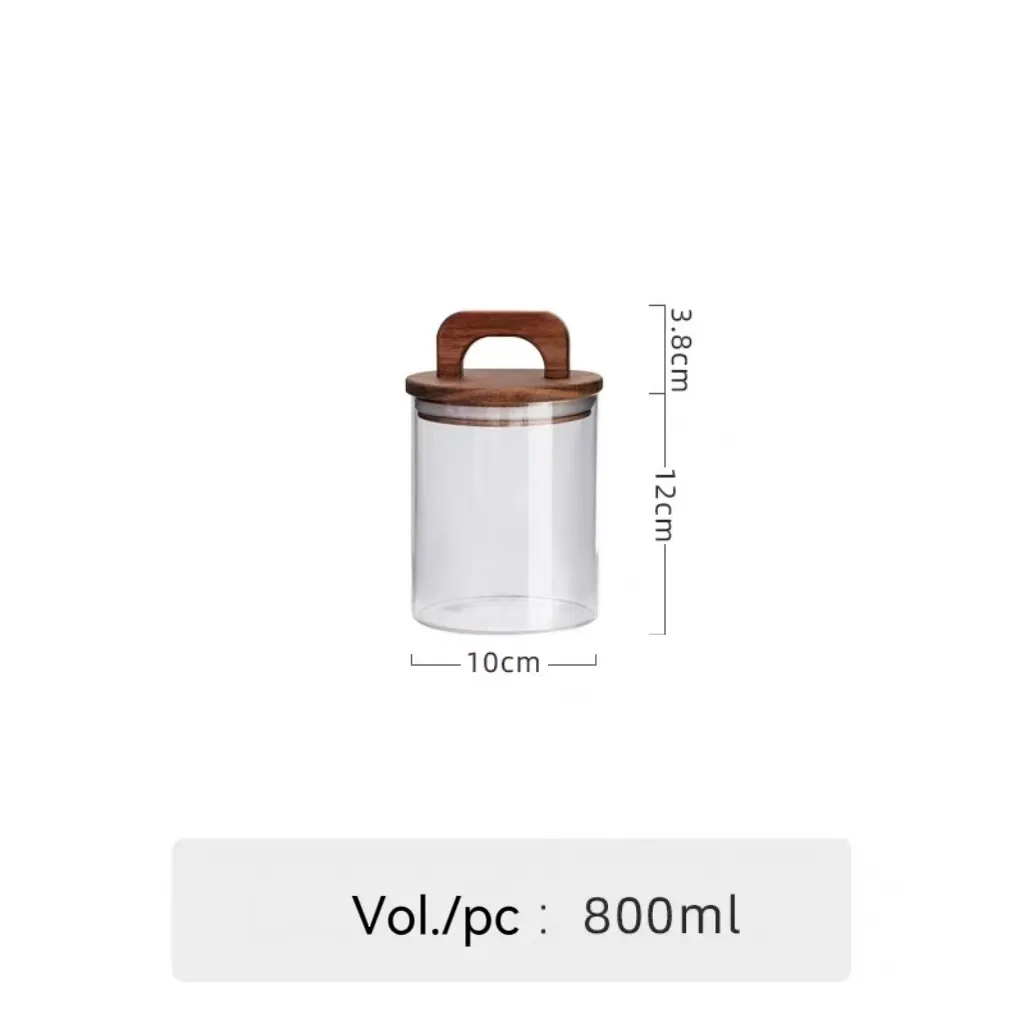
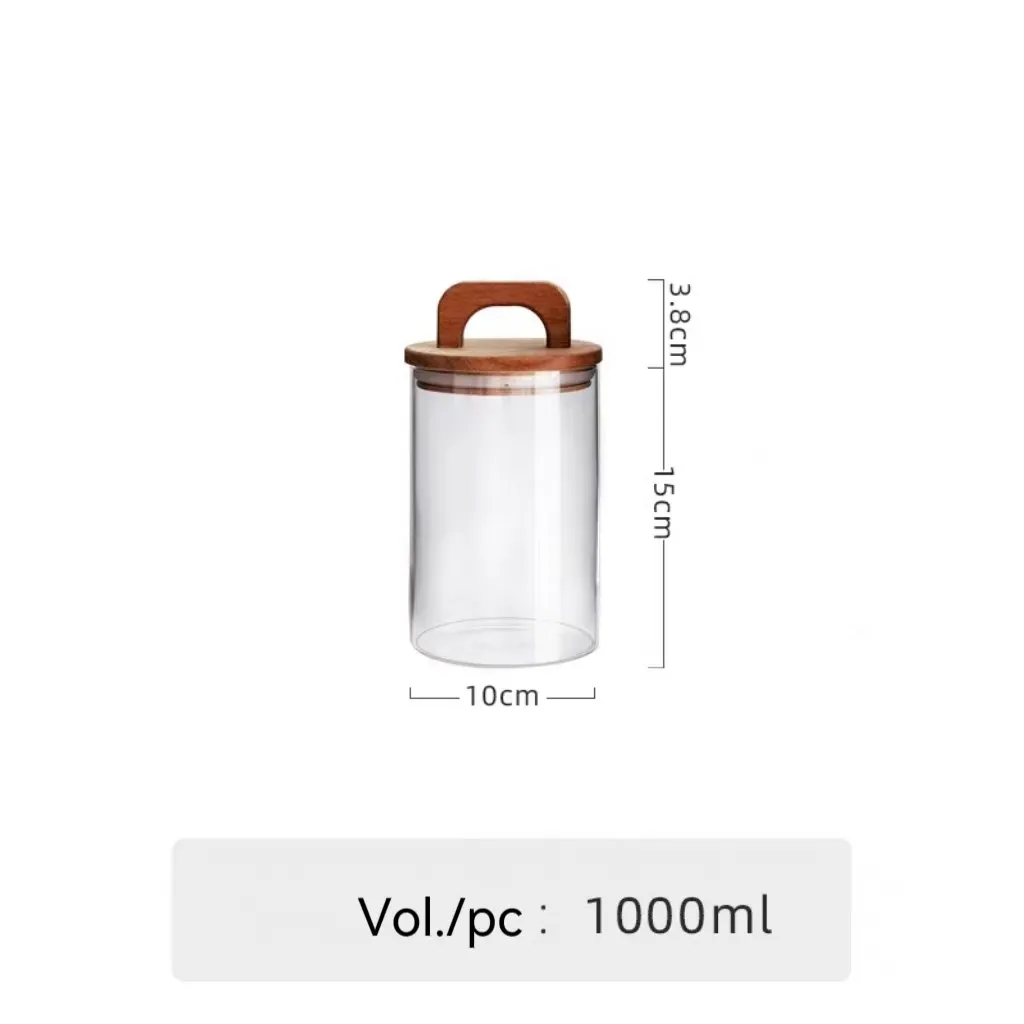
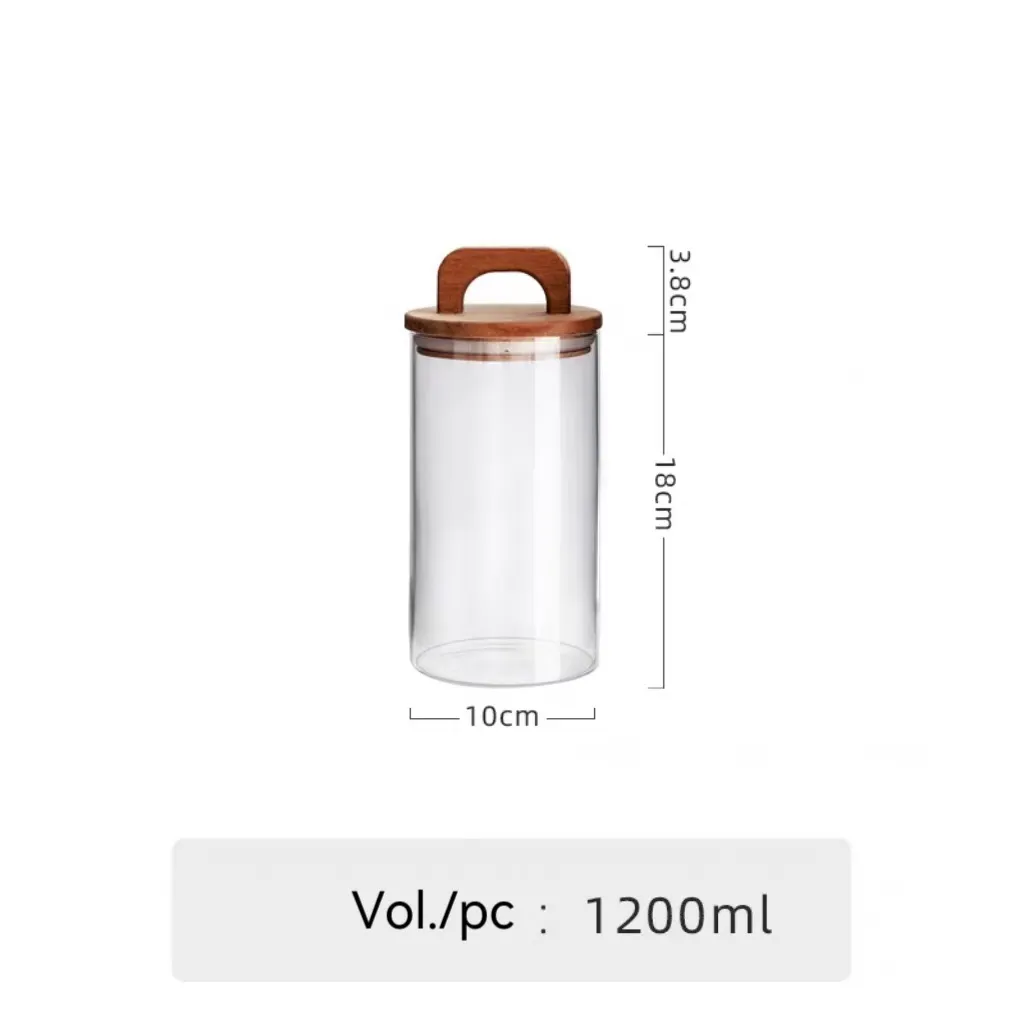
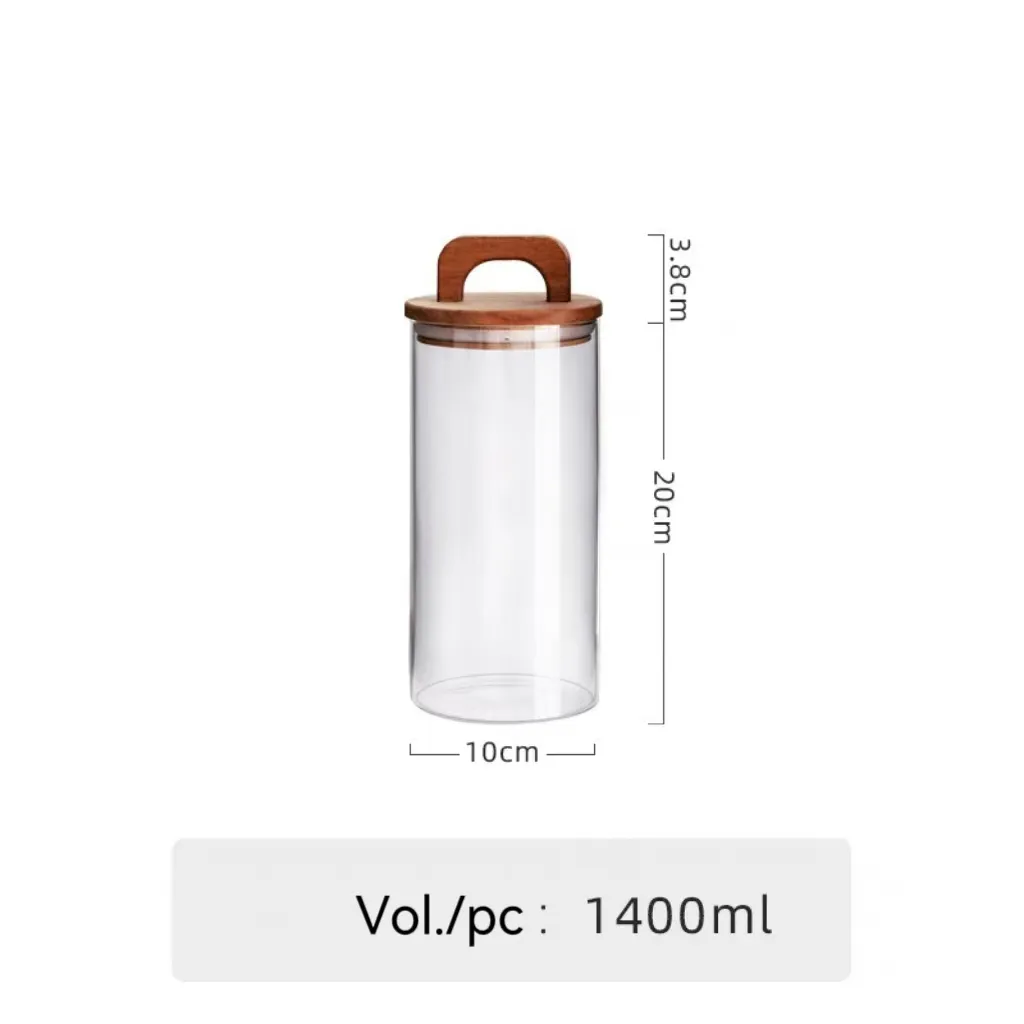
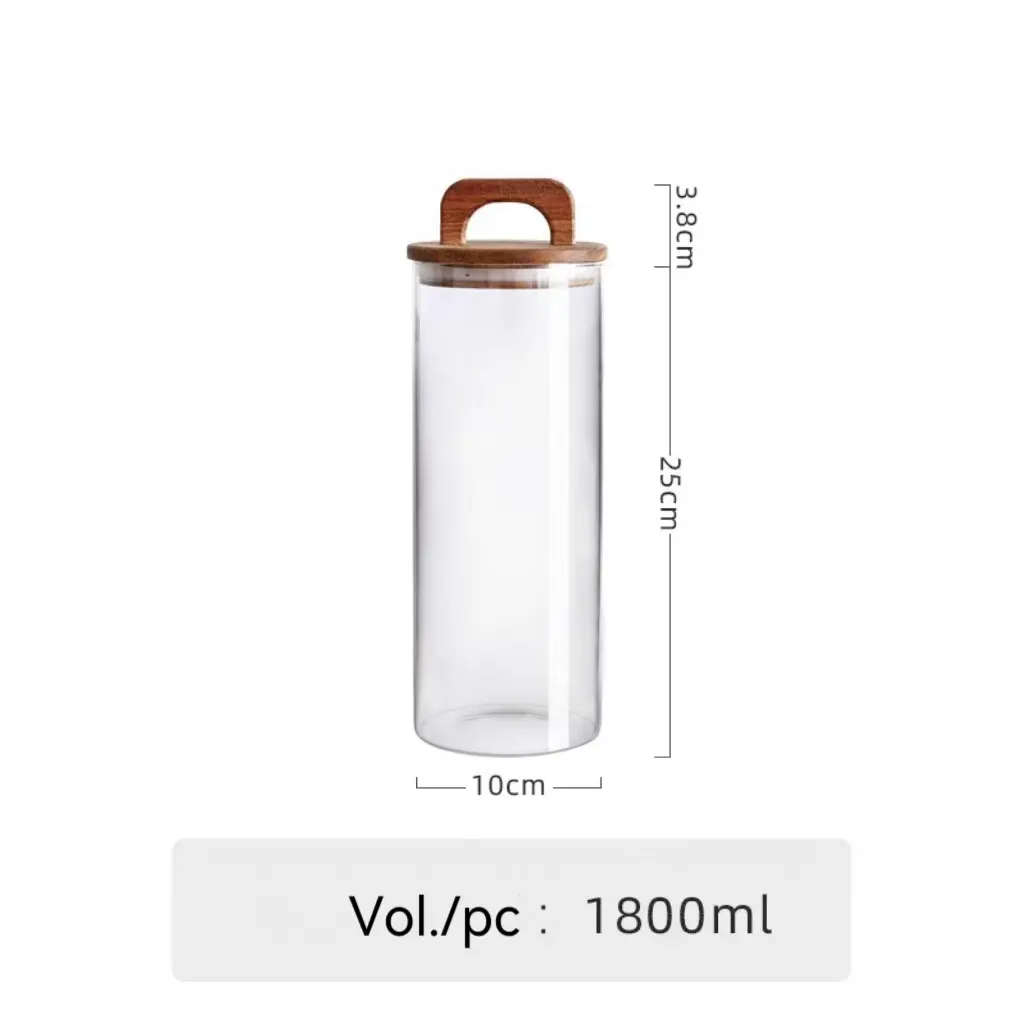
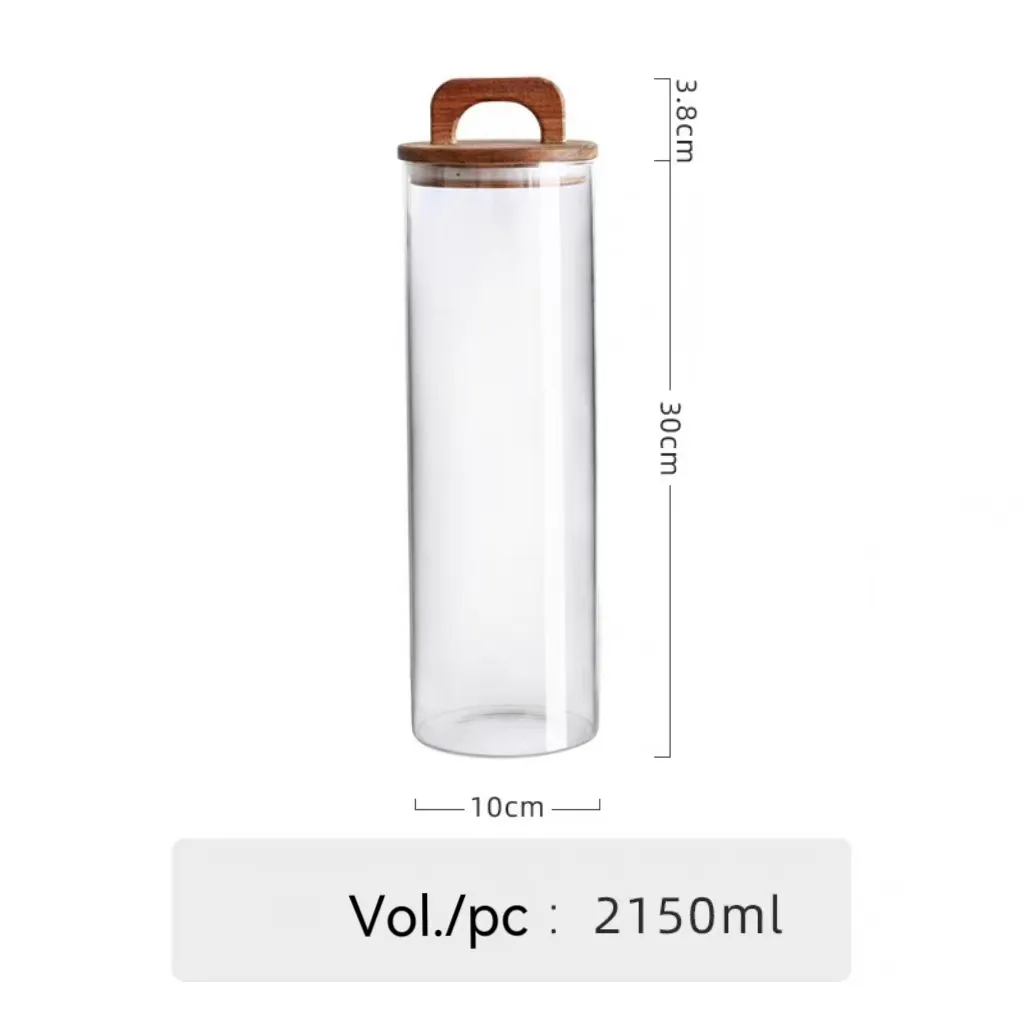
| Capacities | 700 / 800 / 1000 / 1200 / 1400 / 1800 / 2150 ml |
| Glass | High borosilicate (3.3), high transmittance, low expansion |
| Lid | Acacia wood + silicone gasket (airtight/leakproof) |
| Temp range | -20℃ to 150℃; thermal shock ≈120℃ |
| Safe use | Microwave/freezer/dishwasher safe (jar only; lid off) |
| Customization | Glass height & diameter; branding/volume marks on request |
| Compliance | FDA, LFGB; borosilicate per ASTM/ISO classes for Type I glass |
Process flow (how it’s actually made)
- Materials: SiO2-rich batch melted to 3.3 borosilicate; FSC-style sourced acacia; FDA-grade silicone.
- Forming & annealing: Tube/press form → controlled anneal for stress relief → polishing.
- Lid machining: CNC shaping → sanding → food-safe oil finish → gasket press-fit.
- QC testing: Dimensional tolerance ≈±1 mm; leak test (tilt + invert); thermal-shock ΔT 120℃; visual inspection.
- Service life: 5–10 years typical with normal use; replace gasket every 12–24 months.
- Industries: Grocery refill, cafés/roasteries, tea/spice, home organization, bath salts, gift sets.
Vendor comparison (quick buyer’s view)
| Vendor | Lid | Certs | MOQ | Customization |
|---|---|---|---|---|
| Yinto Glassware (Hebei) | Acacia + silicone (airtight) | FDA, LFGB; Type I glass class | ≈1,000 sets | Glass size, logo, packaging |
| Importer A (bamboo-lid) | Bamboo + silicone | Mixed (ask reports) | ≈500–2,000 | Limited sizes |
| Boutique Brand B | Acacia/Bamboo | Usually LFGB | ≈200–500 | High, but pricier |
Applications and field notes
- Zero-waste grocer: switched from tin to glass; reported 0 odor carryover and faster shelf scanning thanks to clarity. Sales of tea blends up 11% (quarter-on-quarter).
- Coffee roastery: 1L jar for whole beans; staff liked the handle grip on the acacia lid—surprisingly ergonomic during rush hours.
Many customers say the seal stays tight after repeated dishwasher cycles (jar only). If your brief still requires wholesale bamboo glass jars, fair enough—just know acacia gives you that premium feel with equal (often better) durability.
Testing, standards, and compliance
- Glass: Type high borosilicate class per ASTM E438; hydrolytic resistance Class 1 (ISO 719).
- Silicone gasket: FDA 21 CFR 177.2600; LFGB food-contact compliant.
- Frameworks: EU 1935/2004 food-contact materials; factory provides reports on request.
If you’re speccing wholesale bamboo glass jars for a retail rollout, check gasket hardness (Shore A), jar wall thickness, and thermal-shock data. Those three decide breakage rates more than lid species, in my experience.
Welcome to contact tina@yintoglassware.com for anyting you want to know further.
Please looking through the website www.yintoglassware.com for more information.
References
- ASTM E438 – Standard Specification for Glasses in Laboratory Apparatus.
- ISO 719 – Glass — Hydrolytic resistance of glass grains at 98 °C.
- FDA 21 CFR 177.2600 – Rubber articles intended for repeated use (silicone gaskets).
- Regulation (EC) No 1935/2004 – Materials and articles intended to come into contact with food
-
Ultimate Guide to Choosing Big Glass Storage Containers for Every NeedसमाचारApr.16,2026
-
Small Glass Lunch Containers Guide for Healthy Meal PrepसमाचारApr.09,2026
-
Comprehensive Guide to Choosing the Best Storage Containers for Dishes and GlassesसमाचारApr.07,2026
-
Selecting The Optimal 300ml Food Containers For Your Business NeedsसमाचारApr.04,2026
-
Discover the Benefits of Durable 3 Cup Glass Food Storage ContainersसमाचारMar.31,2026
-
Comprehensive Guide to Choosing Superior Glass Divided Food ContainersसमाचारMar.28,2026
![[Extra Large with Handle] Oven Safe Glass Food Storage Container with Airtight Locking Lid & Handle, Oven Safe Dishwasher Safe](https://images.exportstart.com/images/a1251/extra-larger-glass-container-with-snap-locking-lid-164.webp "[Extra Large with Handle] Oven Safe Glass Food Storage Container with Airtight Locking Lid & Handle, Oven Safe Dishwasher Safe")
![[All Microwave Safe] High Borosilicate Glass Food Storage Container , Oven Safe without Lid, Dishwasher Safe](https://images.exportstart.com/images/a1251/squre-glass-container-with-glass-lid-518.webp "[All Microwave Safe] High Borosilicate Glass Food Storage Container , Oven Safe without Lid, Dishwasher Safe")
![[Sliding Vent PP Lid] Borosilicate Glass Food Storage Containers with Food-grade Plastic Lid, Airtight, Leak Resistant](https://images.exportstart.com/images/a1251/glass-food-storage-container-with-airtight-lid-183.webp "[Sliding Vent PP Lid] Borosilicate Glass Food Storage Containers with Food-grade Plastic Lid, Airtight, Leak Resistant")
![[Large Skylight Glass Lid] Glass Food Storage Container, Oven Safe with Lid, BPA Free, 100% Leak resistant](https://images.exportstart.com/images/a1251/glass-lid-food-storage-container-1-1-196.webp "[Large Skylight Glass Lid] Glass Food Storage Container, Oven Safe with Lid, BPA Free, 100% Leak resistant")
![[Colorful Vent PP Lid] Glass Food Storage Container, BPA Free, Leakproof, Dishwasher Safe](https://images.exportstart.com/images/a1251/002-1-639.webp "[Colorful Vent PP Lid] Glass Food Storage Container, BPA Free, Leakproof, Dishwasher Safe")
![[Color Vent PP Lid] Borosilicate Glass Food Storage Container, Leakproof, Dishwasher Safe](https://images.exportstart.com/images/a1251/1-941.webp "[Color Vent PP Lid] Borosilicate Glass Food Storage Container, Leakproof, Dishwasher Safe")
![[Vacuum AS] Food Storage Container with Pump](https://images.exportstart.com/images/a1251/7-1-397.webp "[Vacuum AS] Food Storage Container with Pump")