 TEL: +86 18903393212
 Email: tina@yintoglassware.com

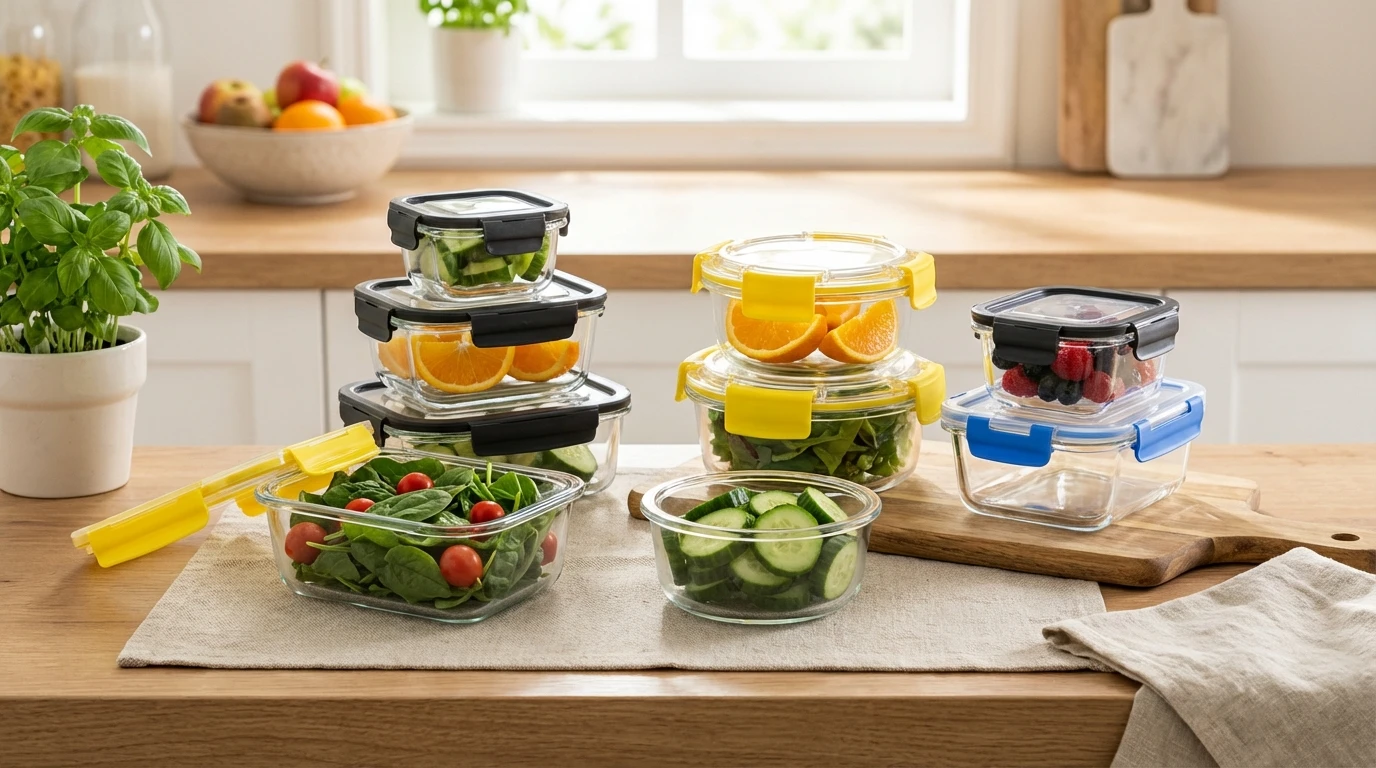
Double Wall Mug with Handle—Hotter Coffee, Cooler Hands?
Why baristas (and picky home brewers) are switching to the double wall mug with handle
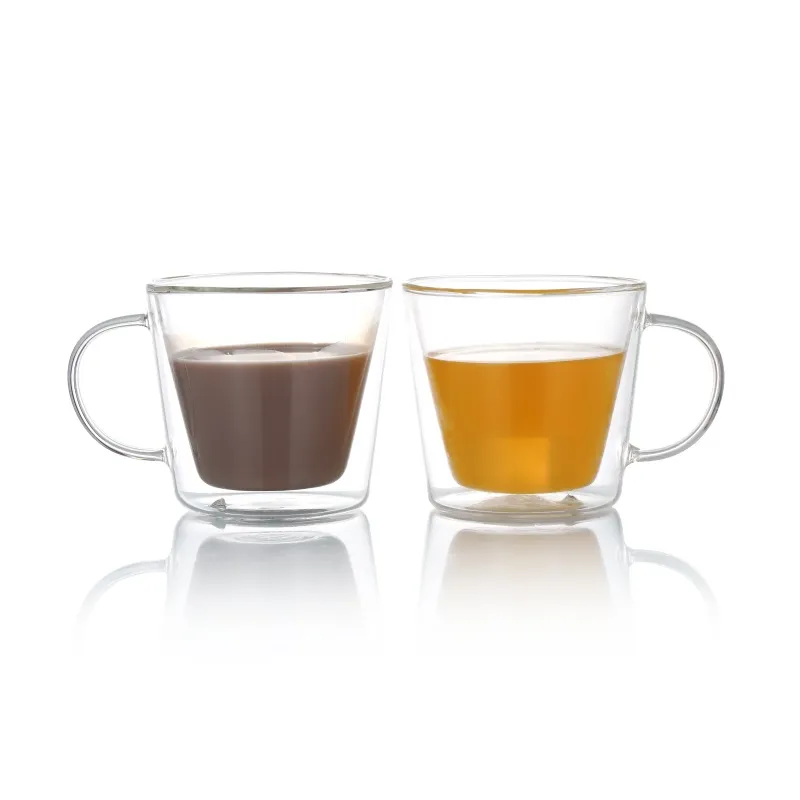
I’ve tested more drinkware than I care to admit, and—honestly—the High Borosilicate Double Wall Glass Coffee Juice with Handle (250 ml) hits that sweet spot: light in the hand, insulated without bulk, and clear enough to show off crema or cold-brew clarity. It’s made in Hebei, China (Room 8019, Hengju Building, No.473 Zhonghua South Street, Shijiazhuang City), and it’s clearly pitched to people who want café aesthetics with commercial toughness. And yes, it’s certified FDA/LFGB/EU, BPA-free, lead-free—more on that below.
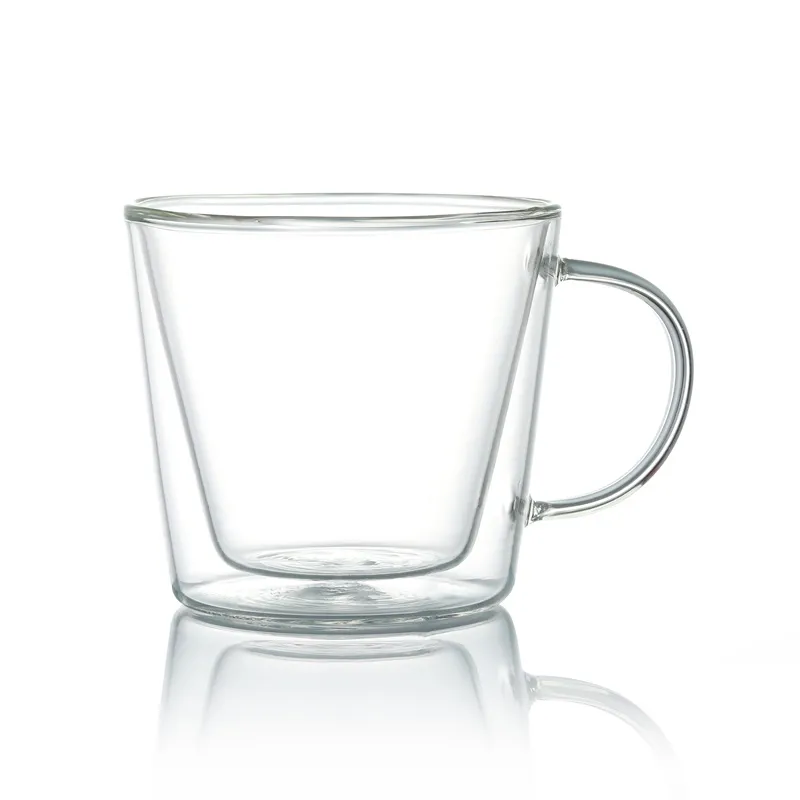
At-a-glance specs (real-world notes)
| Spec | Details |
|---|---|
| Material | 100% High Borosilicate Glass (≈3.3 expansion) |
| Capacity | 250 ml (around 8.5 oz) |
| Weight | ≈170–200 g (varies by handle and wall tolerance) |
| Temp range | -20°C to 150°C; thermal shock ΔT ≈120°C |
| Insulation | Double-wall; keeps coffee hot ≈2–3x longer vs single-wall (real-world may vary) |
| Certifications | FDA, LFGB, EU food contact; BPA-free, lead-free |
| Dishwasher life | 500+ cycles tested; hand wash extends service life |
| MOQ / Branding | MOQ 2000 pcs; custom brand & packaging |
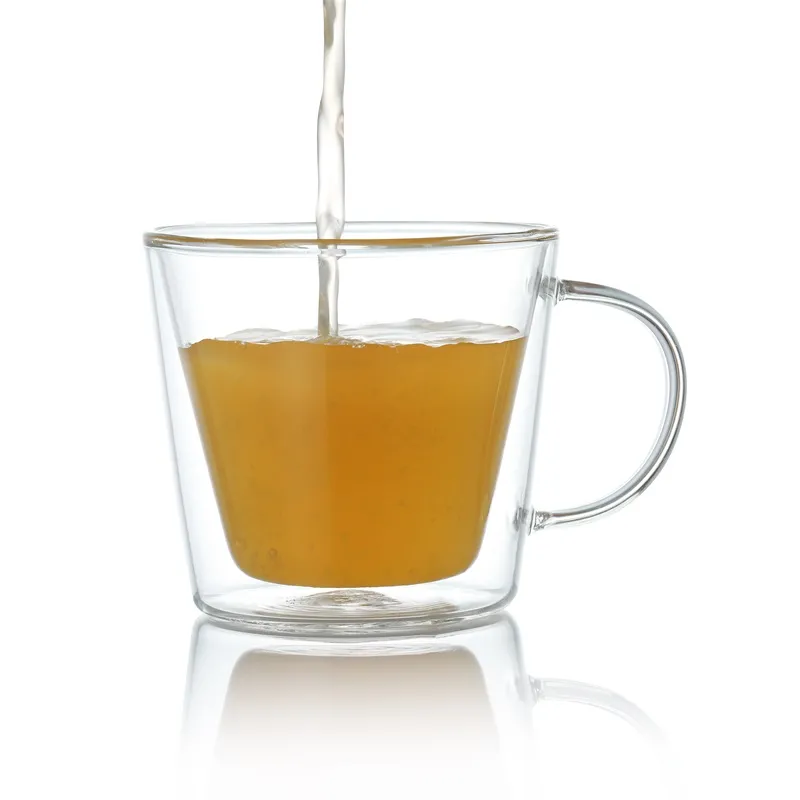
Industry trend check
Glassware is having a moment. Cafés want transparency for latte art; home offices want spill-safe handles; hospitality wants durability without metal taste. The double wall mug with handle answers all three. Many customers say it “feels lighter than it looks”—that’s the borosilicate talking. And yes, it’s surprisingly resilient in busy service, especially compared to standard soda-lime glass.
How it’s made (and tested)
- Materials: borosilicate tubing is cut, blow-molded, and annealed to relieve stress.
- Assembly: inner and outer walls are formed separately, fused at the rim; vacuum layer improves insulation.
- Handle: flame-attached, then annealed to avoid stress cracks at joints.
- Testing: thermal shock per ISO 718; composition per ISO 3585; dishwasher resistance per EN 12875-1; food contact under EU 1935/2004 and LFGB; FDA food-contact guidance for glass.
- Service life: around 3–5 years in home use; in cafés, depends on handling and racks (I’ve seen 18–24 months with heavy turnover).
- Quality: visual inspection (bubbles, seams), rim roundness, vacuum seal, and random drop/edge-impact sampling.
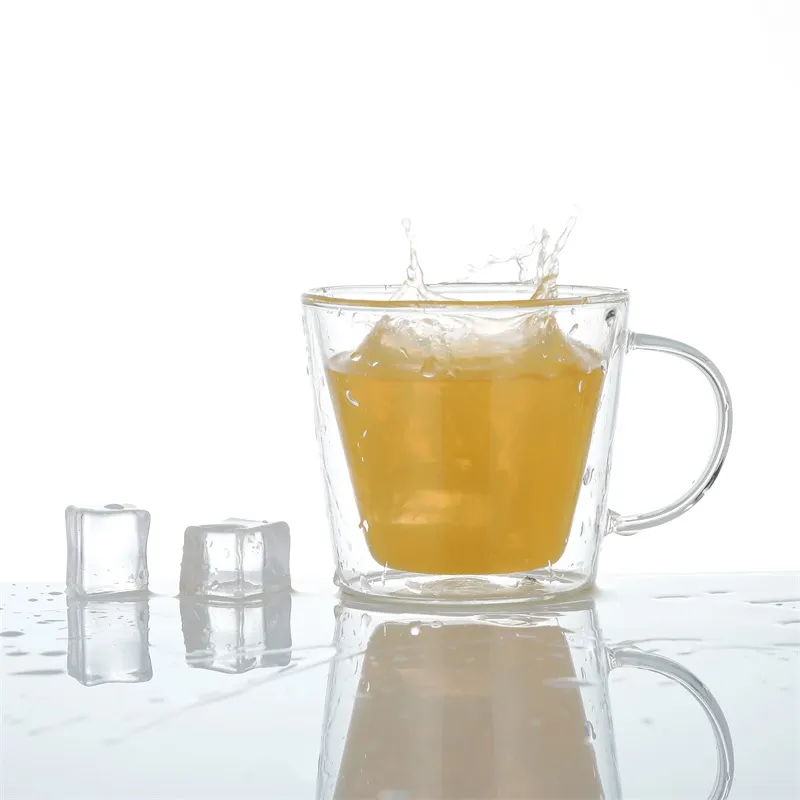
Use cases
Espresso long blacks, pour-over, herbal tea (no burnt fingers), iced juice with no condensation rings, even small desserts. The double wall mug with handle keeps tables dry, and the handle helps in service when drinks are piping hot.
Vendor comparison (what to look for)
| Vendor | Glass Type | Certs | MOQ | Lead Time | Notes |
|---|---|---|---|---|---|
| Yinto Glassware (Hebei, China) | High borosilicate | FDA, LFGB, EU | 2000 | ≈25–35 days | Custom brand/packaging, stable QC |
| EU OEM Supplier A | Borosilicate | EU, LFGB | 1000–3000 | ≈30–45 days | Higher cost, smaller batches possible |
| Marketplace Seller B | Mixed glass | Varies | N/A | Stock only | No customization; spec inconsistency risk |
Customization and packaging
Logo etching or printing, sleeve colorways, and gift boxes are common. Standard international packaging or custom retail-ready sets. For cafés, I recommend rack-friendly cartons and barcode stickers—small detail, big operational win.
Field notes (mini case studies)
- Third-wave café, 60 seats: swapped to the double wall mug with handle, reported 18% fewer customer complaints about “too hot to hold,” and a small uptick in latte art shares on social media (free marketing!).
- Corporate pantry pilot: reduced paper cup use by ≈42% in 90 days; dishwasher-safe rotation worked smoothly with 24-unit racks.
User feedback: “stays hot for my entire meeting” and “doesn’t sweat on my desk.” I guess that’s the whole point.
Compliance quick list
FDA food-contact (glass), EU 1935/2004, LFGB, and internal tests aligned to ISO/EN standards. Always ask vendors for migration test reports, dishwasher cycles, and thermal shock data—real documents, not just badges.
References
- ISO 3585: Borosilicate glass 3.3 — Properties and classification
- ISO 718: Laboratory glassware — Test methods for thermal shock
- EN 12875-1: Mechanical dishwashing resistance of utensils
- EU Regulation (EC) No 1935/2004 — Materials intended to come into contact with food
- U.S. FDA — Food Contact Substances (FCS) Program
-
Ultimate Guide to Choosing Big Glass Storage Containers for Every NeedNewsApr.16,2026
-
Small Glass Lunch Containers Guide for Healthy Meal PrepNewsApr.09,2026
-
Comprehensive Guide to Choosing the Best Storage Containers for Dishes and GlassesNewsApr.07,2026
-
Selecting The Optimal 300ml Food Containers For Your Business NeedsNewsApr.04,2026
-
Discover the Benefits of Durable 3 Cup Glass Food Storage ContainersNewsMar.31,2026
-
Comprehensive Guide to Choosing Superior Glass Divided Food ContainersNewsMar.28,2026
![[Extra Large with Handle] Oven Safe Glass Food Storage Container with Airtight Locking Lid & Handle, Oven Safe Dishwasher Safe](https://images.exportstart.com/images/a1251/extra-larger-glass-container-with-snap-locking-lid-164.webp "[Extra Large with Handle] Oven Safe Glass Food Storage Container with Airtight Locking Lid & Handle, Oven Safe Dishwasher Safe")
![[All Microwave Safe] High Borosilicate Glass Food Storage Container , Oven Safe without Lid, Dishwasher Safe](https://images.exportstart.com/images/a1251/squre-glass-container-with-glass-lid-518.webp "[All Microwave Safe] High Borosilicate Glass Food Storage Container , Oven Safe without Lid, Dishwasher Safe")
![[Sliding Vent PP Lid] Borosilicate Glass Food Storage Containers with Food-grade Plastic Lid, Airtight, Leak Resistant](https://images.exportstart.com/images/a1251/glass-food-storage-container-with-airtight-lid-183.webp "[Sliding Vent PP Lid] Borosilicate Glass Food Storage Containers with Food-grade Plastic Lid, Airtight, Leak Resistant")
![[Large Skylight Glass Lid] Glass Food Storage Container, Oven Safe with Lid, BPA Free, 100% Leak resistant](https://images.exportstart.com/images/a1251/glass-lid-food-storage-container-1-1-196.webp "[Large Skylight Glass Lid] Glass Food Storage Container, Oven Safe with Lid, BPA Free, 100% Leak resistant")
![[Colorful Vent PP Lid] Glass Food Storage Container, BPA Free, Leakproof, Dishwasher Safe](https://images.exportstart.com/images/a1251/002-1-639.webp "[Colorful Vent PP Lid] Glass Food Storage Container, BPA Free, Leakproof, Dishwasher Safe")
![[Color Vent PP Lid] Borosilicate Glass Food Storage Container, Leakproof, Dishwasher Safe](https://images.exportstart.com/images/a1251/1-941.webp "[Color Vent PP Lid] Borosilicate Glass Food Storage Container, Leakproof, Dishwasher Safe")
![[Vacuum AS] Food Storage Container with Pump](https://images.exportstart.com/images/a1251/7-1-397.webp "[Vacuum AS] Food Storage Container with Pump")