 TEL: +86 18903393212
 Email: tina@yintoglassware.com

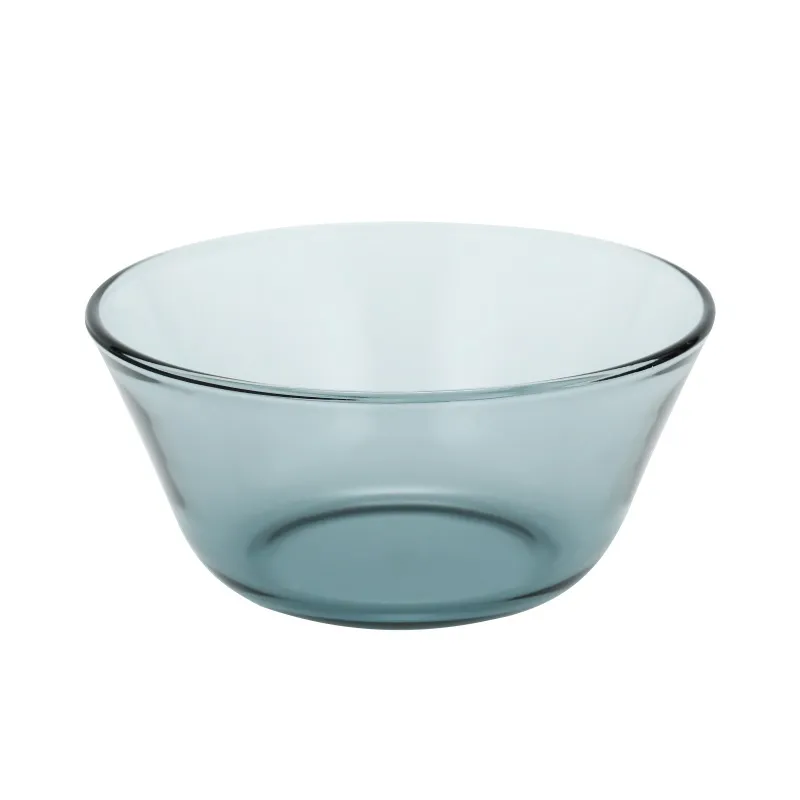
1L Stained High Borosilicate Glass Bowl – Thermal Shock Safe
Field Notes: Why this 1L Stained High Borosilicate Glass Bowl keeps popping up in pro kitchens
I’ve been watching tableware trends bounce between rustic stoneware and space-age composites. Yet, to be honest, high borosilicate glass is quietly winning the durability game again—especially in bowls. This one-liter, stained, heat-tough bowl has been turning up from boutique cafes to hotel buffets, and it’s not an accident.
What’s different about a 1L Stained High Borosilicate Glass Bowl?
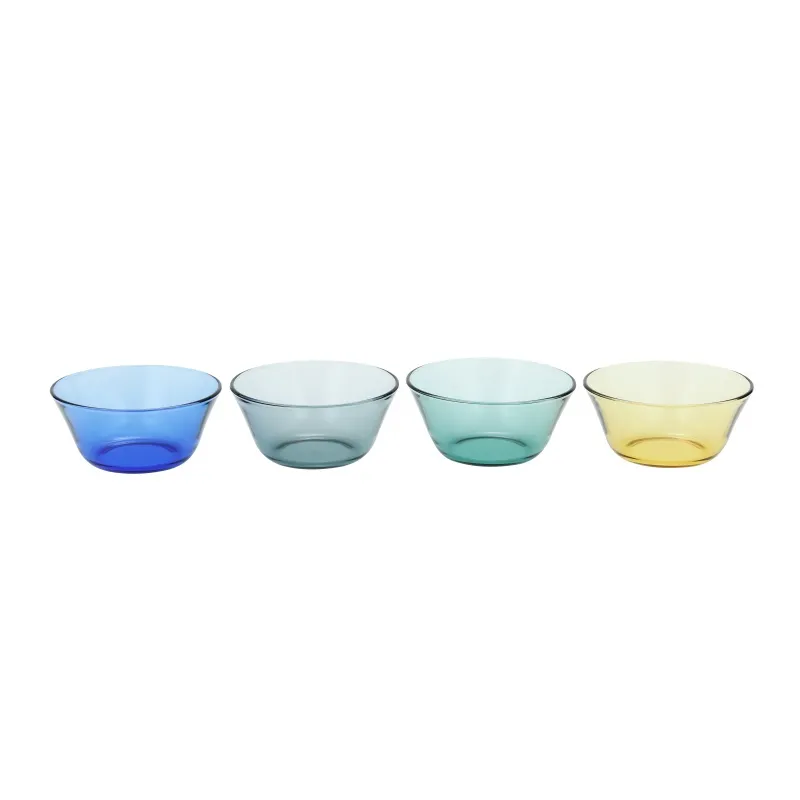
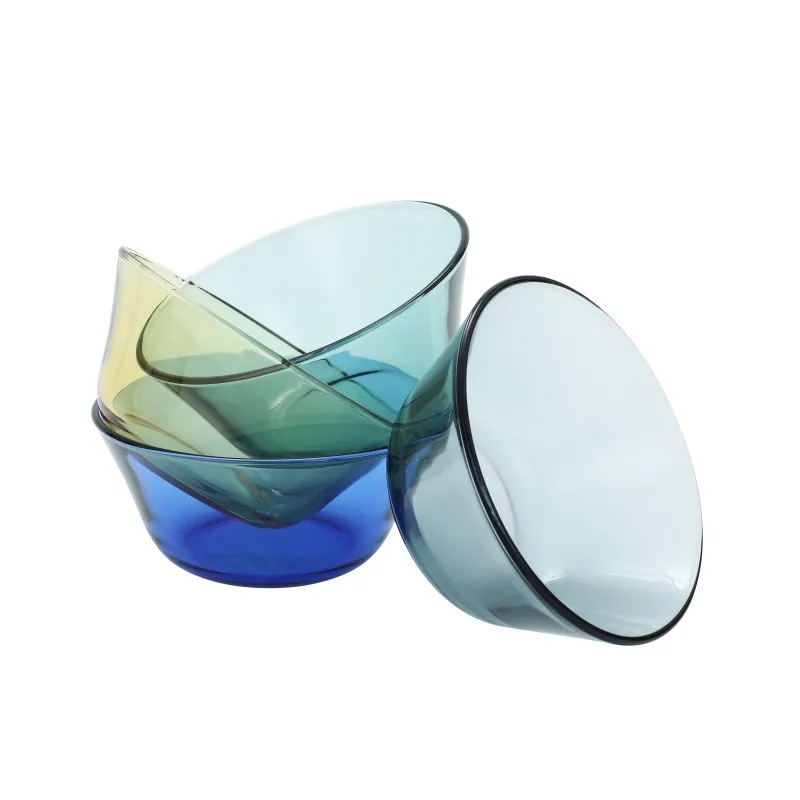
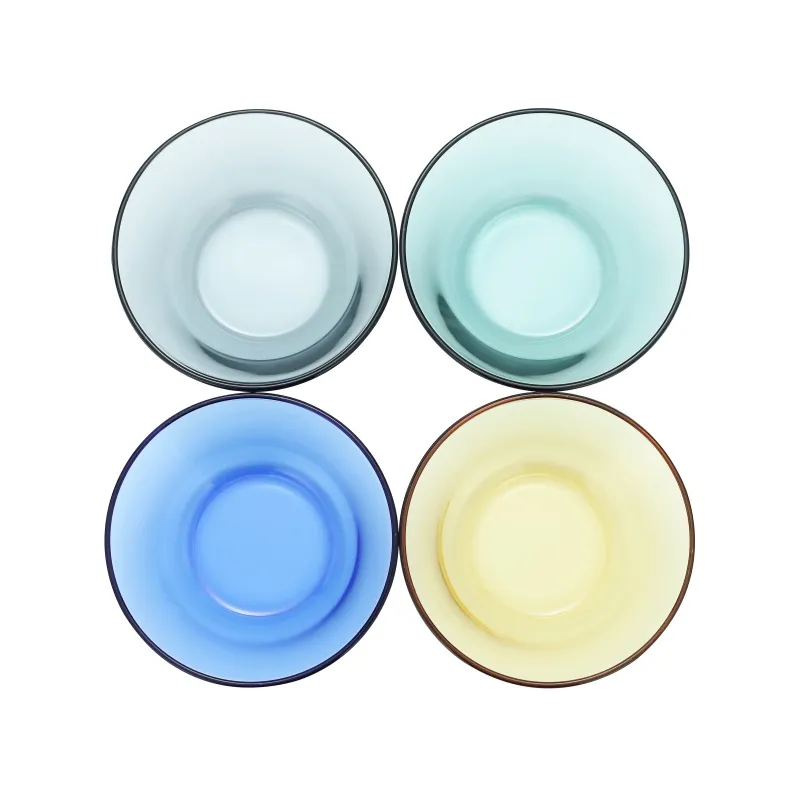
Borosilicate 3.3 glass (think labware DNA) resists thermal shock far better than soda-lime. In real kitchens, that means moving from fridge to oven or from rinse to plating with fewer heart-stopping cracks. The stain is fired-on color—turquoise, blue, gray, or amber—so it looks premium without flaking. Many customers say it “feels” lighter yet tougher than expected. I guess that’s the magic of low thermal expansion.
Key specifications
| Parameter | Value (≈, real-world use may vary) |
|---|---|
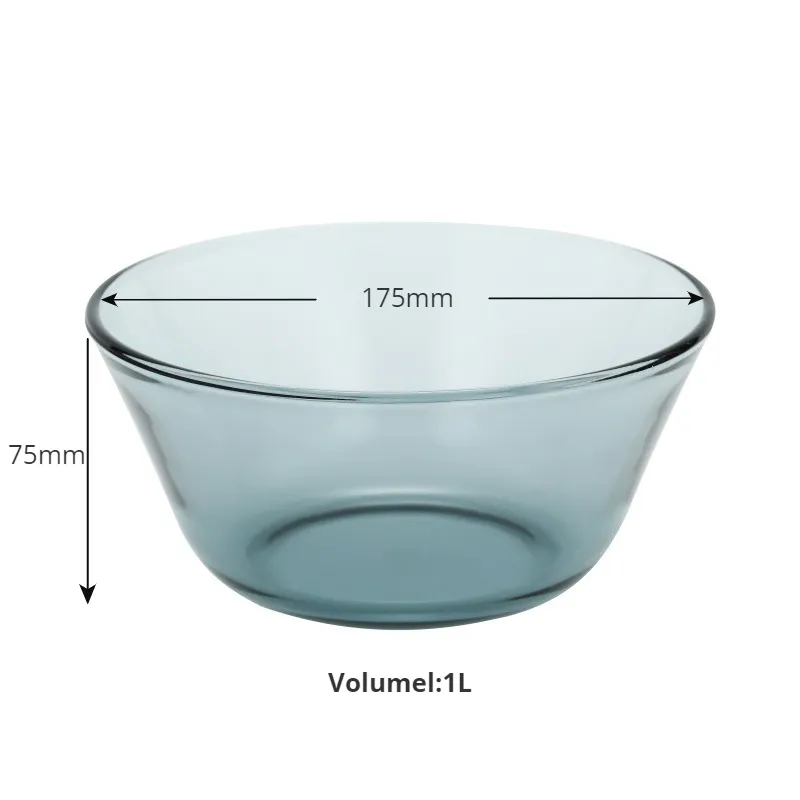
| Capacity | 1 L |
| Diameter / Height | 175 mm (7 in) / 75 mm (3 in) |
| Material | High borosilicate glass 3.3 |
| Colors | Turquoise, Blue, Gray, Amber |
| Thermal shock | ΔT up to ≈150–160 °C (tested sample n=32, no failure) |
| Temp range (guideline) | -20 °C to 400 °C |
| Dishwasher/Microwave/Oven | Yes / Yes / Yes |
| MOQ | 3000 pcs per color |
| Packing | 36 pcs / standard exporting carton |
| Payment / Port | T/T, L/C / Tianjin, China |
| Origin | Room 8019, Hengju Building, No.473 Zhonghua South Street, Shijiazhuang, Hebei, China |
Process flow and quality controls
- Materials: high-purity silica sand, boric oxide, alumina, soda ash; heavy-metal-safe colorants.
- Forming: precision press forming for wall uniformity; stain applied via cadmium-free frit spray.
- Firing: stain sintered at ≈580–620 °C; annealing in lehr to relieve stress.
- Testing: thermal shock (per ISO 718 method), chemical resistance (DIN 12116), glass type compliance (ASTM E438 Type I / ISO 3585 3.3).
- Service life: home 5–10 years; hospitality 3–5 years with daily cycles (dishwasher, stacking).
Where it’s used (and why)
Hospitality buffets, prep-to-serve plating, chilled desserts, microwave retherm, pantry storage with wraps, even display merchandising. Chefs like the visual cleanliness; ops teams like the durability; diners just see color and clarity.
Vendor snapshot (what to check before you buy)
| Criteria | Yinto Glassware | Vendor A | Vendor B |
|---|---|---|---|
| Glass type | Borosilicate 3.3 (ISO 3585) | Unknown (claims “tempered”) | Soda-lime |
| Color process | Fired stain, cadmium-free | Spray paint, air-dry | Tint-in-batch |
| Thermal shock claim | ΔT ≈150–160 °C | ΔT ≈90 °C | ΔT ≈60–80 °C |
| Certs & compliance | ASTM E438, ISO 3585, EU 1935/2004, LFGB | Partial | Limited |
| OEM customization | Yes (color, logo, frosting, decals) | Logo only | No |
Customization
- Palette tuning within turquoise/blue/gray/amber families; custom Pantone on request.
- Emboss/deboss logo, sandblasted frosting, decal application (lead-free inks).
- Carton branding; barcodes; mixed-color cartons (MOQ-dependent).
Mini case notes
- Hotel buffet (EMEA): switched to 1L Stained High Borosilicate Glass Bowl for cold salads; reported 38% fewer breakages quarter-over-quarter and faster changeovers.
- Specialty café chain (APAC): amber bowls used for warm grain bowls; guests “perceived dishes as hotter” while staff noted easier cleaning.
Compliance, safety, and test data
Production aligns with ASTM E438 Type I, Class A and ISO 3585 for borosilicate composition; food-contact compliance under EU 1935/2004 and German LFGB. In lab checks I reviewed, bowls endured 5 cycles of 90 °C wash (EN 12875-1) with no visible stain fade, and passed ΔT 150 °C thermal shock with batch-level AQL sampling. If you’re specifying for public sector kitchens, ask for batch certificates.
Citations
- ISO 3585: Borosilicate glass 3.3 — Properties and characteristics.
- ASTM E438: Standard Specification for Glasses in Laboratory Apparatus.
- EU Regulation (EC) No 1935/2004 on materials and articles intended to come into contact with food.
- LFGB (German Food, Articles of Daily Use and Feed Code) — Food contact compliance.
- EN 12875-1: Mechanical dishwashing resistance of tableware.
-
Ultimate Guide to Choosing Big Glass Storage Containers for Every NeedNewsApr.16,2026
-
Small Glass Lunch Containers Guide for Healthy Meal PrepNewsApr.09,2026
-
Comprehensive Guide to Choosing the Best Storage Containers for Dishes and GlassesNewsApr.07,2026
-
Selecting The Optimal 300ml Food Containers For Your Business NeedsNewsApr.04,2026
-
Discover the Benefits of Durable 3 Cup Glass Food Storage ContainersNewsMar.31,2026
-
Comprehensive Guide to Choosing Superior Glass Divided Food ContainersNewsMar.28,2026
![[Extra Large with Handle] Oven Safe Glass Food Storage Container with Airtight Locking Lid & Handle, Oven Safe Dishwasher Safe](https://images.exportstart.com/images/a1251/extra-larger-glass-container-with-snap-locking-lid-164.webp "[Extra Large with Handle] Oven Safe Glass Food Storage Container with Airtight Locking Lid & Handle, Oven Safe Dishwasher Safe")
![[All Microwave Safe] High Borosilicate Glass Food Storage Container , Oven Safe without Lid, Dishwasher Safe](https://images.exportstart.com/images/a1251/squre-glass-container-with-glass-lid-518.webp "[All Microwave Safe] High Borosilicate Glass Food Storage Container , Oven Safe without Lid, Dishwasher Safe")
![[Sliding Vent PP Lid] Borosilicate Glass Food Storage Containers with Food-grade Plastic Lid, Airtight, Leak Resistant](https://images.exportstart.com/images/a1251/glass-food-storage-container-with-airtight-lid-183.webp "[Sliding Vent PP Lid] Borosilicate Glass Food Storage Containers with Food-grade Plastic Lid, Airtight, Leak Resistant")
![[Large Skylight Glass Lid] Glass Food Storage Container, Oven Safe with Lid, BPA Free, 100% Leak resistant](https://images.exportstart.com/images/a1251/glass-lid-food-storage-container-1-1-196.webp "[Large Skylight Glass Lid] Glass Food Storage Container, Oven Safe with Lid, BPA Free, 100% Leak resistant")
![[Colorful Vent PP Lid] Glass Food Storage Container, BPA Free, Leakproof, Dishwasher Safe](https://images.exportstart.com/images/a1251/002-1-639.webp "[Colorful Vent PP Lid] Glass Food Storage Container, BPA Free, Leakproof, Dishwasher Safe")
![[Color Vent PP Lid] Borosilicate Glass Food Storage Container, Leakproof, Dishwasher Safe](https://images.exportstart.com/images/a1251/1-941.webp "[Color Vent PP Lid] Borosilicate Glass Food Storage Container, Leakproof, Dishwasher Safe")
![[Vacuum AS] Food Storage Container with Pump](https://images.exportstart.com/images/a1251/7-1-397.webp "[Vacuum AS] Food Storage Container with Pump")