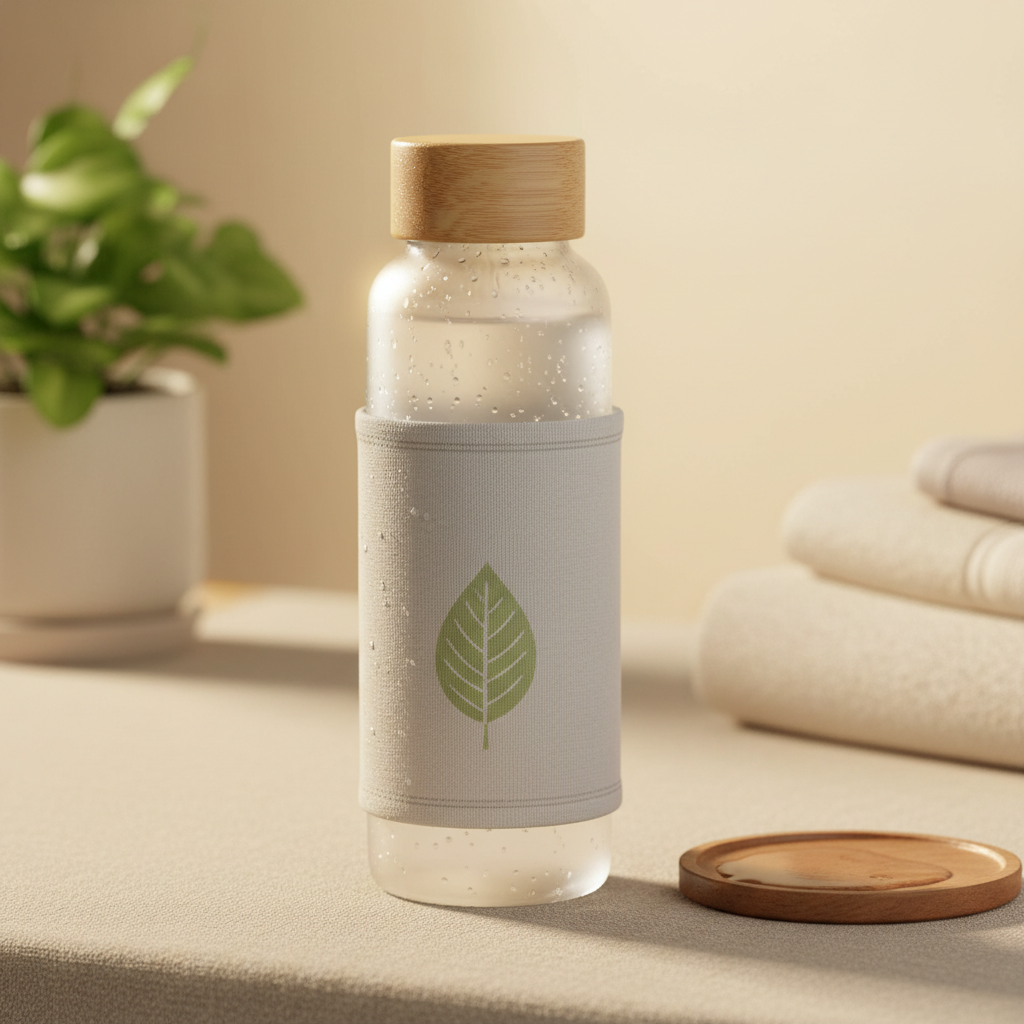
Finding cheap glass water bottles often presents a paradox for procurement managers: how to reduce unit costs without compromising the structural integrity and food safety of the vessel. In the industrial glass manufacturing sector, "cheap" should not signify low quality, but rather optimized production efficiency and strategic material selection.
The shift toward sustainable packaging has intensified the demand for affordable glass alternatives to plastic. Whether for retail distribution or corporate gifting, the objective is to secure a product that balances borosilicate or soda-lime properties with a price point that allows for scalable deployment across various markets.
This guide examines the technical drivers of cost in glass production and provides a framework for evaluating budget-friendly options that still adhere to international safety standards like LFGB and FDA, ensuring that cost-saving measures do not lead to increased breakage or consumer risk.

Decoding the Cost Structure of Budget Glassware

The perceived value of glass water bottles is driven by the intersection of raw material costs and manufacturing precision. To achieve a "cheap" price point, manufacturers often optimize the thermal forming process and utilize economies of scale in the furnace operations, reducing the energy cost per unit produced.
Cost variance typically stems from the choice between soda-lime glass, which is more affordable and common for standard bottles, and borosilicate glass, which offers superior thermal shock resistance but at a higher price. Understanding this distinction allows buyers to select the most economical material that fits their specific temperature requirements.
Furthermore, customization options—such as the type of sealing ring, the complexity of the lid, and the finish of the glass—significantly influence the final invoice. By standardizing these components, businesses can lower the overhead associated with bespoke tooling and setup times.
Essential Technical Criteria for Affordable Glass Bottles
When sourcing budget options, technical verification is the only safeguard against fragile products. Key metrics include wall thickness uniformity, which prevents stress points, and the precision of the neck finish to ensure a leak-proof seal with the closure system.
Compliance with FDA and LFGB standards is non-negotiable, regardless of price. These certifications ensure that the glass is free from harmful lead or cadmium leaches, making the product safe for long-term water storage and daily consumption.
Another critical factor is the annealing process. Proper annealing removes internal stresses from the glass, reducing the likelihood of spontaneous breakage. A budget bottle that skips this step is a liability rather than a saving.
Diverse Application Scenarios for Cost-Effective Glassware
Budget-friendly glass bottles are versatile assets across multiple industries. In the hospitality sector, they serve as an eco-friendly replacement for plastic bottles in hotel rooms, aligning with corporate ESG goals while keeping replacement costs manageable.
For the food and beverage industry, these bottles provide a premium aesthetic for infused waters or cold-brew coffees. The transparency of the glass allows for visual branding through the liquid itself, reducing the need for expensive outer labeling.
In the corporate wellness space, customized glass bottles are often used as promotional items. By selecting standard shapes and customizing only the silicone rings or lids, companies can achieve a high-end look at a wholesale price point.
Evaluating Performance and Durability Benchmarks
Measuring the performance of affordable glassware involves comparing its resilience against industry standard benchmarks. We evaluate factors such as thermal stability, impact resistance, and seal integrity over repeated use cycles.
While high-end specialty glass may offer extreme temperature swings, optimized budget glass is designed to handle standard refrigeration and room-temperature environments with high reliability, as shown in the relative performance metrics below.
cheap glass water bottles Performance Metrics
The data indicates that while budget options may have slightly lower impact resistance than reinforced glass, they maintain high scores in chemical neutrality and sealing efficiency, making them ideal for general hydration needs.
Strategic Procurement Steps for High-Volume Glass Orders
Procuring high volumes of glass requires a balance between MOQ (Minimum Order Quantity) and unit cost. To minimize risk, procurement officers should request a sample run to test the seal quality and glass clarity before committing to a full production cycle.
Negotiating costs should focus on logistics and packaging. Since glass is heavy and fragile, optimizing the shipping pallet configuration and choosing reinforced cardboard packaging can reduce the "landed cost" more effectively than pushing for a lower factory price.
Additionally, verifying the manufacturer's capacity to maintain consistency across batches is vital. A reliable supplier will provide standardized quality control reports for every shipment to ensure that the thousandth bottle is as safe as the first.
Future Trends in Sustainable Glass Manufacturing Costs
The trajectory of glass production is moving toward increased energy efficiency. The adoption of electric furnaces and recycled cullet (crushed glass) is likely to lower the carbon footprint and may potentially stabilize production costs in the face of rising energy prices.
We may also see a rise in "hybrid" material designs, where glass bodies are paired with biodegradable or recycled PP frames and silicone vents to enhance durability without significantly increasing the price point.
As consumer demand for plastic-free living grows, the scale of production for budget glass is expected to increase, which could further drive down costs through improved automation in the blowing and forming stages.
Selection Matrix for Different Glass Bottle Categories
Choosing the right bottle depends on the intended use case and the budget constraints. Not every application requires the highest thermal resistance, and selecting a more basic glass type can lead to significant savings.
The following matrix compares different cost-effective glass categories based on their primary technical attributes and ideal application scenarios to help procurement managers make an informed decision.
| Glass Category | Primary Material | Key Advantage | Best Application |
|---|---|---|---|
| Standard Budget | Soda-Lime Glass | Lowest Unit Cost | Mass Promotional Events |
| Thermal Grade | Borosilicate | Heat Resistance | Hot Beverage Storage |
| Heavy Duty | Thick-Wall Soda | Impact Resistance | Outdoor/Gym Use |
| Premium Eco | Recycled Glass | Low Carbon Footprint | Sustainable Branding |
| Specialty Tint | Colored Glass | UV Protection | Light-Sensitive Liquids |
| Modular Kit | Mixed Glass/PP | Versatile Sealing | Meal Prep/Food Storage |
By aligning the glass category with the actual operational requirements, businesses can avoid over-specifying their products and optimize their procurement budget without sacrificing essential quality.
Frequently Asked Questions
Conclusion
The procurement of affordable glassware is not about finding the lowest price, but about identifying the optimal balance between material properties and application needs. By focusing on certifications, annealing quality, and strategic packaging, businesses can implement sustainable hydration solutions without exceeding their budget.
Professionals seeking to evaluate a wide range of cost-effective glass solutions, from drinkingware to specialized food storage, can review the relevant product and company information available through www.yintoglass.com.